What a homeowner describes
Five ways an off-track door shows up
Each of these can have more than one origin, and the visible symptom is
rarely the whole story. What follows is what a homeowner is seeing and
what belongs to a technician — not a diagnosis.
Door hanging crooked or jammed
One side sits lower, the door binds partway up, or it stops and
refuses to move in either direction.
Possible origins: a
roller out of its track, a bent track section, uneven spring tension,
or a door that has been binding for a while and only now stopped.
Homeowner action:
stop operating it. Do not try to lift it level or force it down.
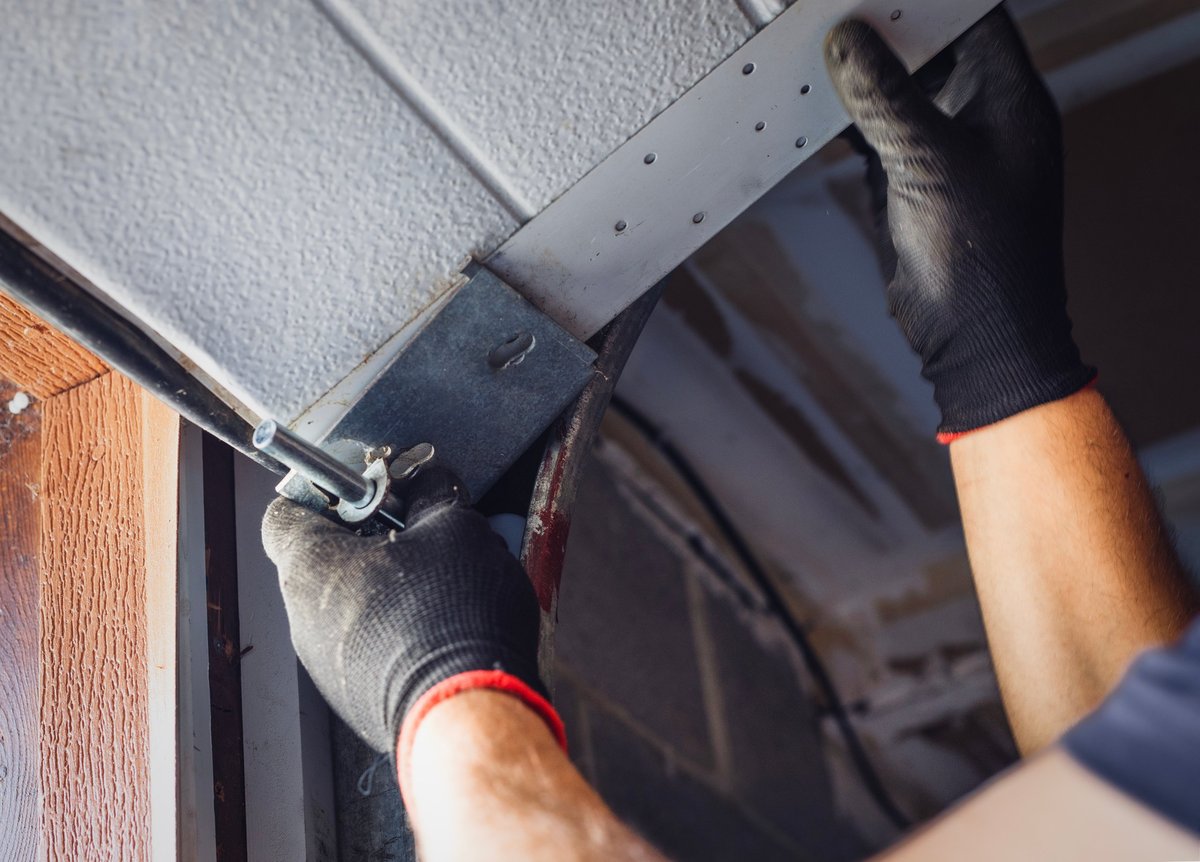
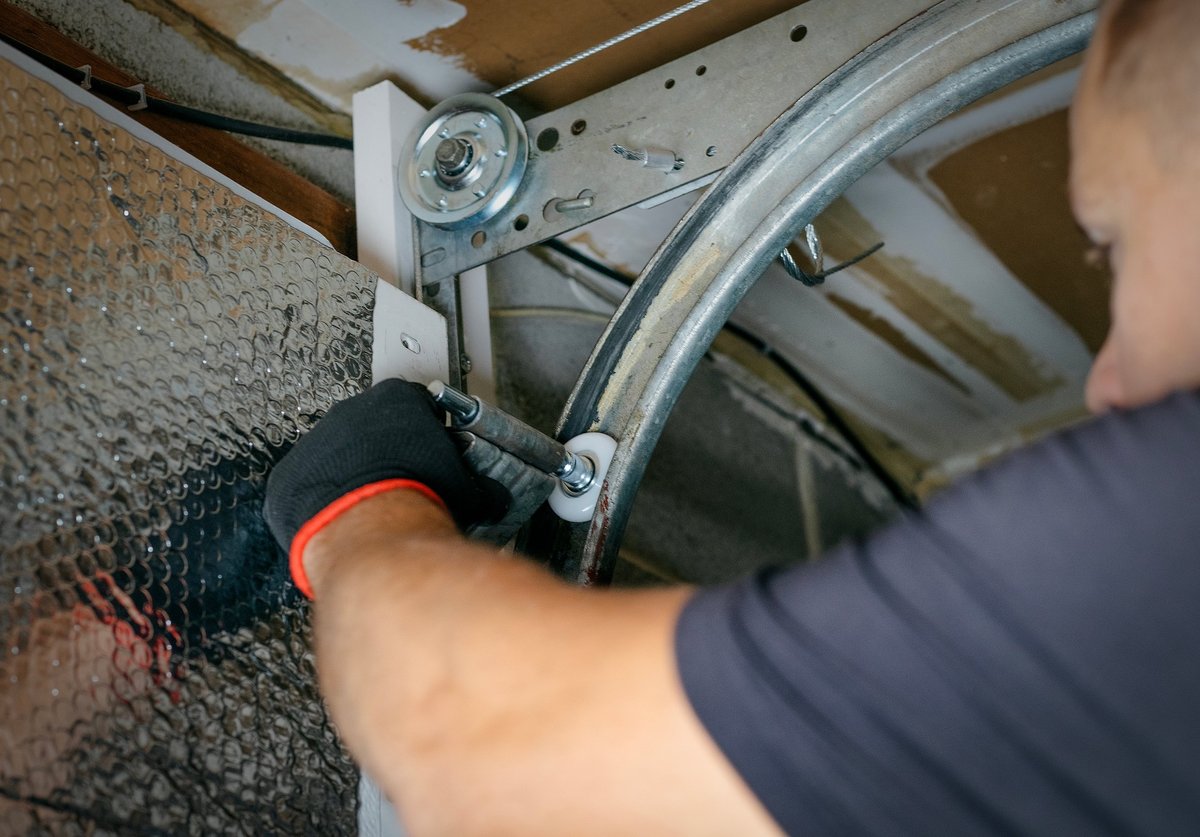
Rollers out of the track
A wheel has popped free and the panel it carries is leaning away from
the frame.
Possible origins:
worn or broken rollers, a track that has spread or shifted, or impact
that knocked the assembly out of alignment.
Homeowner action: do
not push the roller back into place or bend the track by hand. A panel
can drop when a roller is reseated under load.
Impact damage
A vehicle backed into a panel, or something struck the door. It may
look merely dented while the track behind it is bent.
Why it matters:
visible panel damage and hidden structural damage are different
problems. A door with a bent track can be unsafe to operate even if
the panels look serviceable.
Homeowner action:
leave it closed if it is closed and call for an inspection. Do not
cycle it to test the damage.
Obstructed track
Something is caught in the track — debris, a stored item leaning
against it, or an object that fell onto the rail.
Possible origins:
this is one of the few cases with an external cause, but a door that
has been running against an obstruction may also have bent a track or
strained a component.
Homeowner action:
clear loose objects only if it is safe to reach them without touching
the door or its hardware, then have the door inspected before normal
use.
Should not be operated
Some doors reach a state where any further movement risks a panel
dropping or the door coming down uncontrolled.
Treat as out of service:
a door supported only by a damaged component, a track that has
separated from its mounting, or panels that have shifted relative to
each other.
Homeowner action:
keep the area clear, keep vehicles out if it is safe to do so, and
arrange an inspection. Do not attempt to make it operable.
Why there are no DIY steps here
Other garage door pages can safely offer a homeowner a first step.
This one cannot. Correcting an off-track door means working with a
heavy door under spring tension, and a mistake can drop a panel or
release a spring. Every scenario above is written to keep hands off
the door and get someone qualified out to look at it.
On not assuming the cause:
a page that says "your door came off track because of a worn roller"
sounds expert and is frequently wrong. Off-track doors are caused by
rollers, tracks, springs, impact, obstruction, and installation or
settling issues, and the same visible symptom can come from more than
one. The honest framing — here is what you are seeing, here is why it
needs inspection — is also the one that avoids a technician
contradicting your website in the driveway.