Found On Local
Call

Commercial Electrical

Commercial buyers don't call. They check you first.

A homeowner with a dead outlet searches once and dials the first number that looks legitimate. A facility manager, property manager, or general contractor does something different: they look for whether you handle commercial work at all, then they forward your link to someone else for approval before anyone picks up the phone.

That means the page has to hold up without you in the room. This one is about making yours do that for service calls, tenant improvements, maintenance, and project work.

  • Whether your site reads as a commercial contractor or a residential one that also takes commercial jobs
  • Whether a facility manager can tell what you actually do before they have to ask
  • No invented licenses, bonding, capacity, response times, or safety records

Found On Local is a marketing company, not a commercial electrical contractor. We do not hold or verify trade licenses, bonds, or insurance, do not staff crews, and do not perform electrical work. Any credential that appears on your site has to come from you, stated accurately.

Request the Free Commercial Search Review

Tell us about the business and the commercial work you want more of. We look at how you appear when a facility manager, property manager, or GC is searching, and what happens after an inquiry arrives.

Commercial work is usually searched by metro or by property portfolio, not by neighborhood. List the markets you actually serve.

We use your details only to follow up about this request. We do not sell or rent your information. Read our Privacy Policy and Terms & Conditions.

Four different buyers

"Commercial electrical" is not one service. It is four, with four different buyers.

A single "commercial" page usually tries to cover all of this at once and ends up answering none of it. These are the four lanes most commercial contractors actually work in, and what each buyer is trying to figure out before they call.

Service calls

Facility and property managers

Something is down and it affects tenants or operations. The buyer needs a company that answers, can find the panel without a tour, and understands that a dark suite is a lease problem, not a convenience problem.

What they check: do you say commercial at all, and is there a path to reach a person.

Tenant improvement

General contractors and build-out teams

A suite is changing hands or a space is being reconfigured. The GC is assembling a bid list and needs to know whether you can read a set of drawings, work inside someone else's schedule, and coordinate with other trades.

What they check: do you have a page that admits you bid plan-and-spec work.

Maintenance

Portfolio and asset managers

The most valuable work in commercial electrical is the work that recurs. A maintenance agreement buyer is evaluating reliability over a year, not a single repair, and they are usually comparing two or three companies.

What they check: whether you explain what a maintenance agreement actually covers.

Project work

Owners, developers, and industrial buyers

New construction, equipment power, service upgrades for a building, or a production line that needs to move. Long sales cycle, multiple decision-makers, and a paper trail before anyone talks scope.

What they check: whether you look substantial enough to be forwarded internally.

A deliberate limit: this page makes no claims about licenses, bonding, insurance limits, certifications, safety records, crew size, project capacity, or response times. Those are verifiable facts about your business, and the only accurate version of them is the one you give us.

Two electricians reviewing and testing a commercial electrical distribution board in a control room, with test equipment and a laptop open beside the panel

The forwarding problem

Your page gets forwarded to someone who has never heard of you.

In residential work the person who searches is the person who decides. In commercial work they are frequently not the same person. The facility manager searches, finds two or three candidates, and sends links to a property manager, an owner, or a purchasing contact who has no context beyond the page.

That second reader is deciding whether you look like a company that belongs in a commercial building — and they are deciding it from your website, not from your reputation, which they do not know yet.

  • Building types named — office, retail, restaurant, warehouse, multifamily, industrial. A buyer wants to see their own building listed.
  • The work described in the buyer's language — three-phase service, panel schedules, load studies, plan-and-spec, closeout documents — not in homeowner terms.
  • A clear statement of how you take on work — bid invitations, service requests, and maintenance conversations are three different front doors.
  • Some sign of real commercial experience, in your own words, without inventing a project list you cannot back up.

What the review looks at

Five places a commercial inquiry leaks before it reaches you

The site reads residential

If the homepage is a house and a smiling technician, a facility manager assumes you are a residential shop and moves on without reading further.

No page per lane

One page trying to cover service, TI, and maintenance at once answers none of them, and none of them rank for their own intent.

A consumer intake form

A form that asks for a home address and a preferred appointment window tells a commercial buyer you do not do this very often.

Nothing to send purchasing

If the forwarded page has no capability detail, the second reader has no reason to reply "yes, get a quote."

Follow-up that assumes one decision

Commercial cycles have more than one person in them. A single generic follow-up email usually ends the thread.

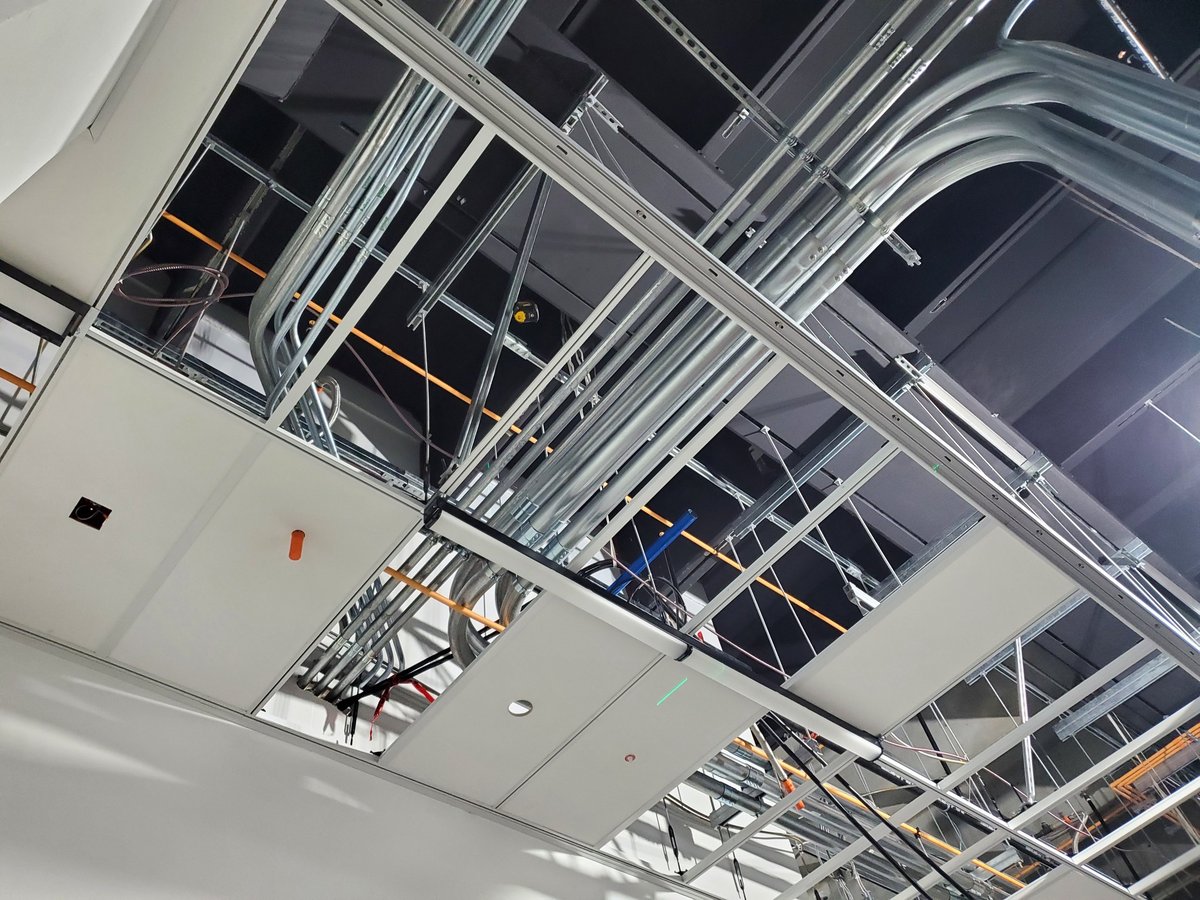
Exposed ceiling grid and lighting rough-in inside a commercial building under construction, with conduit and electrical boxes installed above the finished framing

Inquiry qualification

What a commercial inquiry has to contain to be worth your estimator's time

The difference between a commercial lead that closes and one that wastes a week is almost always what got captured in the first ninety seconds. These are the details a commercial intake should be pulling — and the ones a residential form never asks for.

Building type and use

Office, retail, restaurant, warehouse, multifamily, medical, industrial. The building type changes the code path, the access, and often whether the job is worth bidding at all.

Who the buyer actually is

Owner, tenant, property manager, facility manager, or general contractor. Each one has a different approval path and a different definition of urgent.

Scope and service size

A single circuit, a panel replacement, a suite build-out, or a service upgrade. Knowing which one it is determines whether this is a service ticket or a bid.

Whether there is a deadline

A tenant move-in date, a lease commencement, a production restart, or a bid due date. Commercial work is usually date-driven, and a date is the single most useful field on the form.

Whether drawings exist

Plan-and-spec work needs a set to bid. Design-build or service work may need none. Asking this early separates a real bid invitation from a fishing expedition.

Site location and access

Which property, which floor, occupied or vacant, freight or dock access, and whether work happens after hours. All of it affects scheduling and nothing about it is guessable.

For the record: we do not publish pricing for your work, do not arrange financing, do not quote payment terms, and do not advertise licensing, bonding, insurance, certifications, safety records, crew capacity, response times, or client results you have not given us in writing. What we do is make sure the details above are easy to capture before someone gets on the phone.

What actually happens

Four steps, and you are never guessing where you stand

No discovery maze, no automated scorecard, no drip sequence you cannot get out of. A person looks at your commercial presence and then talks to you about it.

  1. You send the request

    Name, company, email, phone, service area, and which lane you want more of. That is the whole ask. If you have a website, paste the URL; if you do not, we will work from your Google Business Profile and what your customers see when they search.

    Nothing here asks you for license numbers, bonding, insurance limits, or project history. We do not need those to look at how you appear in search, and we will not publish them on your behalf.

  2. We read your presence the way a buyer would

    Starting from the search result and ending at the inquiry form, we work through the path a facility manager, property manager, or GC would take:

    • What you appear for when someone searches commercial electrical work in your market
    • Whether your profile reads commercial or residential at a glance
    • Whether there is a page per lane, or one page trying to cover four
    • What your inquiry path captures before anyone gets on the phone
    • Where a forwarded link would fail a second reader
    • Whether an inquiry is followed up once or worked through a cycle
  3. We walk you through the findings

    By phone or email, in plain language. What is working, what is costing you commercial inquiries, and what we would change first. If the honest answer is that your problem is not a marketing problem, we will say that instead of selling you a scope.

    You get the findings whether or not you hire us. They describe your business, not ours.

  4. You decide, with no pressure and no long contract

    Take it to your own team, sit with it, or ask us to fix the first thing on the list. There is no long-term agreement waiting at the end of the call, which also means we will tell you when a scope does not justify the spend.

What this process does not do: it does not audit your electrical work, verify a license or bond, confirm insurance limits, evaluate safety records, or assess whether you can staff a given project. We are a marketing company. Any claim about your qualifications has to come from you.

Looking for emergency calls, panel upgrades, generators, rewiring, or EV chargers instead of commercial work? See the electrician marketing overview .

Straight answers

What commercial contractors ask before they fill this out

If the answer you need is not here, call and ask directly. We would rather answer the question than have you submit a form you are unsure about.

One place to start

See what a facility manager finds when they look you up

One short request. A person reviews the account and tells you what they found — including the parts that are fine and the parts that are not. The findings are yours whether or not you hire us.

Handling emergency calls, panel upgrades, generator work, charger installs, rewiring, and commercial projects? See the full electrician marketing approach rather than just this one intent.