D-01
Sewer camera survey
A push camera travels the line and records what is actually there — roots, bellies, offsets, or a failed section.
- Method
- CCTV push camera
- Output
- Recorded footage
Demonstration website created by Found On Local. This is not an operating plumbing company.
CLEARLINE
Drain & Sewer
A drain and sewer layout built around documentation: camera footage first, jetting second, and a written record of what was found. Written for the homeowner who has already had a drain "fixed" twice.
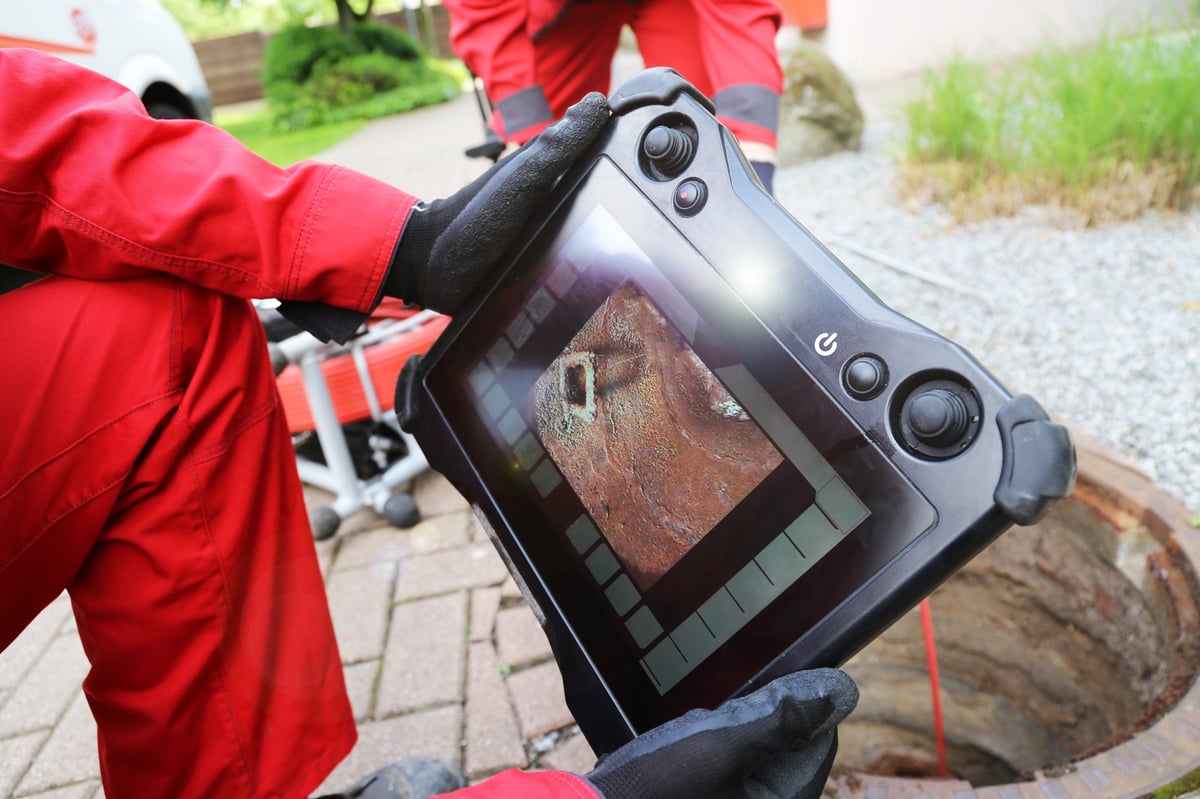
Reference imagery
Illustrative equipment photo — not a project by this fictional company.
Each entry states the method and the evidence produced — because "we snaked it" is not a diagnosis.
A push camera travels the line and records what is actually there — roots, bellies, offsets, or a failed section.
High-pressure water scours the full pipe circumference rather than punching a hole through the blockage.
The line between house and municipal connection — the one most "drain clearing" calls are actually about.
Roots find joints. Cutting them without a plan is why the same line backs up every season.
A sewage backup is a health issue before it is a plumbing issue. The page structure leads with containment guidance.
A camera survey before buying a house — the report a buyer can hand to a seller instead of a verbal warning.
Method descriptions describe a demonstration layout only. No pricing, response time, success rate, or outcome is represented anywhere on this page.
This sequence is the trust argument for a drain company. It replaces "trust us" with an order of operations the customer can follow.
One fixture or the whole house? Gurgling elsewhere? Slow after laundry? These answers separate a trap issue from a main line issue before a truck rolls.
Cleanout, roof vent, or a pulled fixture. Access decides the method, and the customer is told which one is being used and why.
Footage is captured before clearing, not after. The evidence matters most when it shows the problem still there.
Jetting or mechanical clearing, followed by a second camera pass. A drain that flows is not automatically a drain that is fixed.
Footage, access point used, and what a repeat problem would indicate. The customer keeps the record either way.
Each of these is a real credibility signal a genuine drain company should publish from verified information. A demonstration page cannot invent them.
(573) 520-3674Reaches Found On Local, the agency behind this example.
Drain and sewer work is scheduled around access points, not walk-ins. So the honest way to describe coverage is by how scheduling changes as distance grows — not by a pin on a map that points at a rented mailbox.
The three bands below show how a real business can set expectations without promising a response time it cannot verify.
Note on this example
No city names, ZIP codes, street address, or map pin appear anywhere here — ClearLine Drain & Sewer is a fictional company. On a live site, these bands would list actual towns and travel expectations.
Scheduling bands
Distance increasing →
The area a crew drives through most days. Surveys and jetting are scheduled within normal appointment windows.
One municipality or township out. Work is batched onto set days so a drive out is worth making — and customers are told that before booking, not after.
Whether a job is taken depends on the work — a planned camera survey is a different decision than a fixture-level clearing. Stated up front in plain language.
Want to know which band a property falls in?
Ask Found On LocalA drain inquiry form should collect the details that determine method and access — not a paragraph of free text the dispatcher has to decipher.
Repeat vs. first-time — the single most useful question a drain company can ask.
Property type — a single-family main line and a building stack need different tools.
Known access point — cleanout, vent, or none known. It sets the visit plan.
Demonstration form
Submissions go to Found On Local, the agency that built this example page. Nothing here is dispatched to a drain company.
Mockup — scheduled survey, not emergency dispatch
Direct answers, including the limits of this demonstration page.
ClearLine Drain & Sewer is a fictional company name. This example shows how a diagnostic-first drain and sewer brand can present method, sequence, and coverage using a technical green-on-black system — with no invented reviews, ratings, licenses, addresses, response times, prices, or results.