Emergency Garage Door Repair Campaign

Emergency Repair Campaigns

An open garage door at 11pm is a security problem, not a repair

The house is not sealed. Anyone can walk in. The car is stuck on the wrong side of a door that will not move, or the door came down crooked and stopped halfway. The homeowner is not researching — they are looking for someone who might answer right now.

Whether that is you depends entirely on how your business actually operates. This campaign is built to present your real availability accurately, because the fastest way to turn an emergency call into a bad review is to imply 24/7 coverage you do not staff.

Availability varies. Service hours, after-hours coverage, and how quickly a technician can reach you depend on the individual garage door company and your location. Nothing on this page promises 24/7 service or a guaranteed arrival time.

Urgent scenarios named plainly — stuck open, stuck closed, trapped vehicle, sudden spring or cable failure, a door that will not secure.

Safe first steps for the homeowner while they wait, with load-bearing parts explicitly off limits.

Hours and coverage stated as they are — yours, not an industry assumption about what an emergency page should claim.

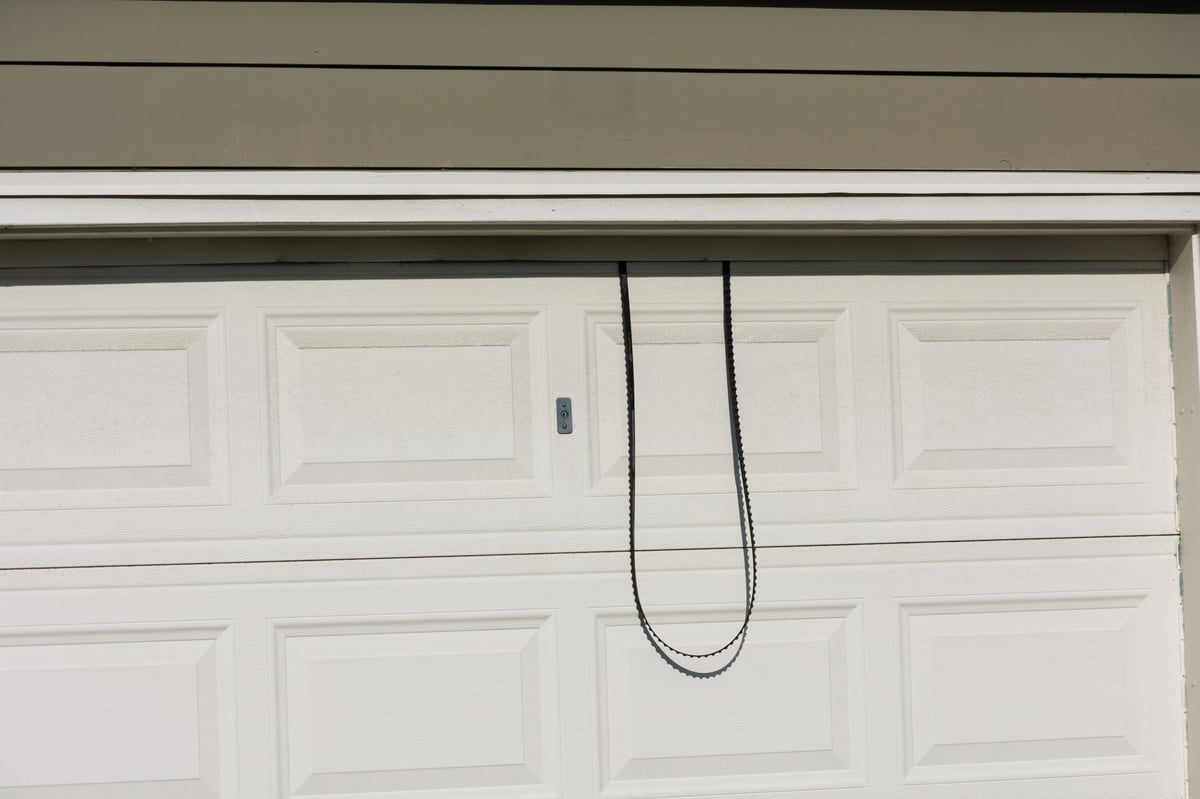
White garage door with a loose black drive belt hanging down from the top track, showing a failed opener mechanism

Get My Free Emergency Garage Door Repair Marketing Audit

We review how your urgent and after-hours searches actually convert — Maps visibility, your emergency page, tap-to-call, and whether the phone gets answered.

List the cities or counties you actually send techs to.

We use your details only to follow up about this request. We do not sell or rent your information. Read our Privacy Policy and Terms & Conditions.

What actually happens at 11pm

Five urgent situations, and what a homeowner can safely do

These are the searches that come in at night. Each entry says what the situation is and the limited, safe steps available before a technician arrives — with the parts that must not be touched named explicitly.

Door stuck open

The house is unsealed and the homeowner is deciding whether to sleep or stay up. This is the most common night call and the most justified.

Safe to try: confirm the opener is unplugged or the breaker is off so the door cannot move unexpectedly, then call. Some homeowners can manually lower a door by hand using the release — but only if it is light enough to control, and not when a spring is broken.

Never: force a door that will not budge, or attempt it if a spring or cable has failed.

Vehicle trapped inside

A work truck, a school run, a shift starting in two hours. Urgency is real and usually time-boxed.

Worth asking on the call: whether the customer has another vehicle, and whether the appointment can be scheduled around their shift. A page that acknowledges the practical problem reads as human.

Never: suggest driving through or lifting the door with a vehicle.

Sudden spring or cable failure

A bang, then a door that will not lift. Occasionally a snapped cable whips and damages surrounding parts.

Genuinely dangerous: springs and cables are under high tension. A released spring can cause serious injury, and a door held only by a broken spring can fall.

Never: cut, loosen, or attempt to adjust cables, springs, or bottom brackets. Keep people and pets clear of the door and call.

Door will not secure

It closes but does not lock, sits crooked in the opening, or reverses halfway and leaves a gap.

Practical interim step: the homeowner can secure the opening as best they can with an interior barrier or by parking a vehicle in front of it, and should not keep cycling the door in the hope it seats.

Never: advise blocking the safety sensors or holding the wall button to force it closed.

After-hours inquiries

Often sent at night about a problem the homeowner will address tomorrow — but they are still awake, still worried, and still choosing.

What the page should do: say clearly what happens to a message sent after hours, and whether it reaches a person or is answered the next business morning. A form that sets that expectation honestly converts better than silent uncertainty.

Never: imply overnight dispatch unless a person is genuinely on call.

The blanket rule

Anything under tension, anything holding the door's weight, and anything electrical inside the opener is a technician's job. The homeowner's role in an emergency is to make the opening safe, keep people away from the door, and get someone qualified on the phone. Every scenario above is written to that line.
The availability question

Emergency marketing fails when the page outruns the business

Every garage door site in a market claims "24/7 emergency service." Most cannot staff it. The claim works once, then produces a missed call, an angry homeowner, and a one-star review that sits on the profile for years.

What we will not write

  • That you are open 24/7, 365, or "always available" — unless a specific client has confirmed those exact hours and staffing.
  • Guaranteed arrival windows, response times, or "on site within the hour" claims.
  • Emergency coverage described as citywide or countywide when the real radius is smaller.
  • After-hours surcharges, no-trip-fee promises, or holiday pricing that is not in your actual rate card.
  • Any statement that a call will reach a live person at 2am when it will reach voicemail or a form.

These are not style preferences. In this niche they are the difference between a page that generates work and a page that generates complaints.

What an honest page says instead

  • The actual service window, in plain language, in the header and near the call button.
  • What happens to an after-hours message — who reads it, and when they respond.
  • The real service radius, town by town, if that is how you actually dispatch.
  • An explicit note that availability and timing depend on the company and location.
  • Safe first steps for the homeowner while they wait, so the page is useful even if you cannot come tonight.

Paradoxically, the honest version converts better on emergency searches, because it is the only one that sounds like a real business.

This depends on information only you have

Before this page can state hours, a service radius, or after-hours behavior, we need the specifics from the garage door business it is for. Until then the page is deliberately general: it describes the situations, gives homeowners safe guidance, and says plainly that availability and timing vary by company and location. No hours are invented, and no arrival times are promised.

Start the audit

Straight answers

Questions about the emergency repair campaign

Prefer to talk it through?

Call and tell us your real hours, your radius, and what happens when the phone rings after dark. We will build the page around what is true.

(509) 508-1008

One step

See whether urgent searches reach you or your competitors

The free audit reviews your Maps presence on urgent queries, whether your site makes calling obvious on a phone at night, your responsiveness in reviews, your real service radius on the page, and — the part most audits skip — what actually happens to a call that arrives when nobody is at a desk.

Service hours, after-hours coverage, and response timing depend on the individual garage door company and location. We will not publish availability claims until the business confirms them.

No rankings promised. No lead counts promised. Month to month.