Auto Body & Collision Marketing Hub

Marketing built around how collision repair is actually sold

A rear-ended commuter on the shoulder at 7am, a policyholder told to "take it wherever," a lease return with three door dings, and a dealership sending over a certified pre-owned unit are four different buying decisions. Generic "local business" marketing treats them as one.

This hub covers the system we build for collision shops, paint and refinish studios, PDR specialists and fleet repair operations: Google Maps and local search, service and city pages, photo-estimate intake, Google Ads, reputation, and what happens to a tow-in call after the phone stops ringing.

5.0 from 10 Google reviews Serving the U.S. & Canada No long-term contracts
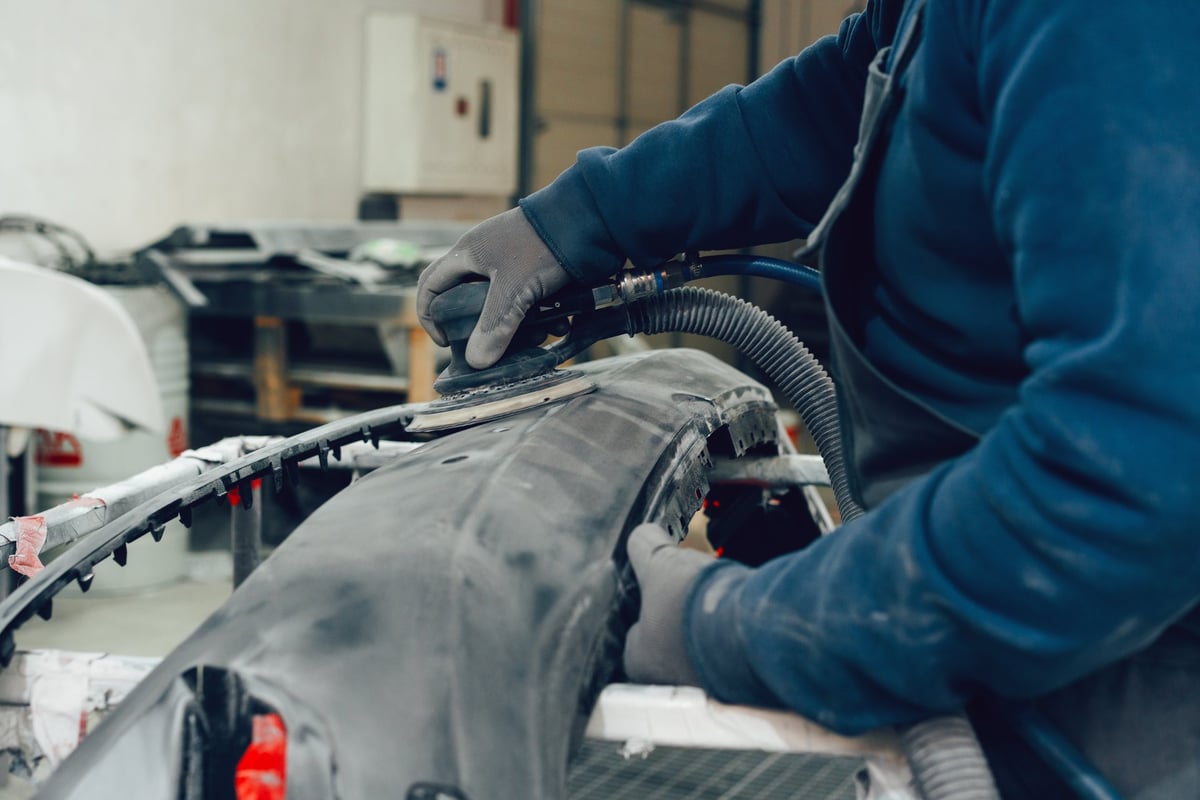
Auto mechanic straightening car body in car service station close up

Photo-first intake

Because most collision estimates start with six blurry phone photos and a question about the deductible.

ADAS & EV aware

Calibration, pre-scan and post-scan realities explained before the customer asks, not after.

The real problem

Four jobs arrive at your shop. Four completely different buyers.

Most auto body marketing is written for a single imaginary customer — somebody with a dent and a checkbook. Real collision shops juggle insurance work, self-pay cosmetic work, dealer and fleet relationships, and after-hours emergency tow-ins, and each one needs different pages, different proof and a different phone script.

The accident on the shoulder

Searching on a phone, hands shaking, one question: who can take this today and deal with the insurer. They will call the top three results in the map pack and pick whoever answers. Page speed and call answering decide this lead — not your 20-year history.

Won or lost in the first 60 seconds

The policyholder told "use anyone"

They have coverage and no idea what that means in practice. What they want to know is whether you will handle the adjuster, whether the supplement is a fight they have to referee, and how long they will be in a rental. Most body shop sites answer none of it.

Won by explanation, not by price

The cosmetic self-pay job

A lease return inspection sheet, a curb-rashed wheel, a shopping cart crease. They are price-shopping, they want a number before they commit to a visit, and they will compare your page to a PDR specialist and a detailer. Value has to be shown with photos.

Won by visible work

The fleet and dealer account

Volume work with cycle-time pressure and a procurement mindset. Nobody calls a phone number from a Facebook ad for this. It is won with a commercial page, documented turnaround, insurance certificates and a submission process that looks like a vendor, not a shop.

Won by credibility signals

This is where generic agencies fall apart. A CRM-and-checklist agency will build you one "Collision Repair" page, point a campaign at "auto body near me," and report form fills. It will not know that an insurance job and a $280 wheel repair cannot share a landing page, that the adjuster relationship is a marketing asset, or that the shop answering its phone at 9pm on a Saturday takes the tow-in. Those things decide revenue in this trade.

Search intent

Nobody searches for "auto body." They search for what just happened.

The words in a collision search are a description of an event, not a service category. Each of these four query groups needs its own page, its own proof, and its own next step — because the visitor behind each one is willing to do something different today.

Damage-event searches

The highest-urgency and highest-value group. These people had a normal day until about forty minutes ago and are often still standing next to the car.

  • collision repair near me
  • body shop open now
  • car accident repair today
  • fender bender fix

What wins: a mobile-first page with tap-to-call above the fold, a real address and hours block, and a clear "we work with your insurer" statement in the first screen.

Insurance-process searches

Calmer, more deliberate, and far more likely to ghost you. They are trying to work out whether choosing your shop will create work for them, and they are comparing three shops at once.

  • how does an insurance claim work
  • shop that handles the adjuster
  • supplement vs original estimate
  • total loss or repair

What wins: an explainer page that walks the claim timeline honestly, plus a direct-billing and "we meet the adjuster" proof block. Education converts here.

Cosmetic & paint searches

Price-sensitive, photo-driven, and easy to lose to a detailer if your page looks like a collision shop. They want to see the before and after before they trust a number.

  • paint correction near me
  • scratch repair cost
  • paintless dent repair
  • bumper scuff fix

What wins: a gallery-led page with real close-up finishes, expected price ranges, an upload-a-photo estimate form, and a clear difference between PDR and refinish.

Commercial & fleet searches

A completely different person is searching: a fleet manager, dealership service director, or property manager who needs documented capability and a vendor packet, not a coupon.

  • fleet body repair vendor
  • dealer reconditioning partner
  • commercial truck collision repair
  • fleet cycle time repair

What wins: a commercial page with turnaround benchmarks, DRP and OEM certifications, insurance and compliance documents, and a downloadable capabilities sheet.

One site can hold all four — but not on one page. The shops that rank and convert run separate service pages, separate city pages for each service, and separate ad campaigns pointing at the matching page.

Credibility layer

In collision repair, the certifications are the marketing

Nobody hands over a $9,000 vehicle repair to a shop they cannot verify. OEM certification, I-CAR training, ADAS calibration capability, and the insurer relationships you actually hold are the strongest trust signals in the category — and almost every shop buries them in a footer or forgets to list them at all.

We build a credibility layer that surfaces these where they matter: on the service page, in the ad, and in the first screen of the estimate form. The point is not decoration. It is giving an anxious buyer a reason to stop comparing and call.

Ask yourself this

Can a stranger tell, in ten seconds on your homepage, whether you can calibrate a camera behind a windshield? If not, you are losing late-model work to the shop that can — and late-model work is where the margin is.

OEM certifications, named

Which manufacturers actually certify your shop, on what equipment, and what that means for a warranty-holding owner. Vague "certified technicians" badges do nothing.

ADAS & calibration reality

Static versus dynamic calibration, pre-scan and post-scan, and why the estimate on a 2022 vehicle is not the estimate on a 2009. This is a modern differentiator most shops never mention.

Insurer relationships made visible

DRP participation, direct-billing capability, and which carriers you work with — stated plainly, with honest limits. If you are independent, say why that benefits the customer.

Written-limited-lifetime guarantees

Workmanship warranty terms, what is covered, and how a repaint issue is handled a year later. Put the terms on the page instead of repeating them on every phone call.

Documented repair process

Tear-down photos, the supplement conversation, parts choice, and the quality-control checklist before keys go back. Photos of your own process beat stock photography every time.

Real names and real faces

The estimator who will call them, the painter, the owner. In a trade built on trust, an anonymous website is the single cheapest thing to fix and the most frequently overlooked.

What we actually build

Six pieces, one system — not six disconnected tactics

A shop with great ads and a slow site loses the lead at the form. A shop with a beautiful site and no Maps presence never gets seen. Each piece below only works because the next one is in place.

1. Google Business Profile & Maps

The categories, services, service-area settings, hours, and photo cadence that decide whether you show up when someone taps "body shop near me." Done properly, this is the cheapest lead source you own.

2. Service & city page architecture

Separate pages for collision repair, paint and refinish, PDR, glass, frame, and commercial work — each with its own city variants where you genuinely serve them. No thin doorway pages duplicated across twelve towns.

3. Website & mobile conversion path

Fast pages, tap-to-call that works with one thumb, a photo upload estimate form, hours and location above the fold, and no twelve-field contact form standing between a stranded driver and your shop.

4. Google Ads & Local Services Ads

Tight geography, negatives that keep DIY and junkyard traffic out, call tracking, and campaign budgets tied to booked estimates instead of clicks. Every campaign points at the page that matches its search.

5. Reviews & reputation

A review request that goes out at vehicle pickup — the only moment a customer is genuinely delighted — plus a response process for the occasional insurance-dispute complaint that lands in public.

6. Lead handling & follow-up

Missed-call text-back, after-hours AI reception, an estimate follow-up sequence for the people who go quiet, and reporting on how many inquiries became booked work. This is where most ad budgets quietly die.

Want to see which of these six is currently costing you work?

The free audit reviews all six and tells you plainly which gaps matter for a collision operation — and which ones you can safely ignore for now.

Start with the audit

How the engagement runs

Four stages, in the order that actually moves revenue

We do not start with ad spend. Spending money to send traffic to a slow site with no answer on the second ring is the fastest way to conclude that marketing does not work for collision shops.

  1. Audit & baseline

    We document where you rank for each service in each city, how your profile looks against the three shops above you, what your site does on a phone, and what happens when somebody calls after hours. You get the findings whether or not you hire us.

  2. Fix capture before traffic

    Hours, location, tap-to-call, the photo-estimate form, missed-call text-back, and a profile that names the work you do. Nothing is spent on ads until an inquiry has somewhere useful to land.

  3. Build the pages, then advertise

    Service and city pages go up with real photos and your actual certifications. Once they exist, campaigns point at the page that matches the search — and only at searches worth paying for.

  4. Measure booked work

    Reporting is on calls, forms, booked estimates, and jobs written — not impressions. Channels that fail get cut. Channels that produce get more budget. Reviewed with you monthly, no lock-in.

Capture first

Most shops see the fastest change from answering calls and fixing the mobile form — before any ranking moves at all.

Organic is slower

Local and organic visibility builds over months, not weeks. We will not pretend otherwise, and we do not guarantee positions.

No lock-in

Month to month. You own the site, the profile, and the data. If it is not working, you should be able to leave — that keeps us honest.

Campaign Pages

Ten auto body campaigns, built one intent at a time

Each page below is a complete campaign landing page with its own positioning, trust block, qualification questions and audit request form. They are noindex, follow and kept out of public navigation — ad traffic only.

All ten pages carry the same standardized Free Auto Body Marketing Audit form with UTM and GCLID attribution, and route accepted submissions to /ads/auto-body-marketing/thank-you.

Website design examples

Ten design directions for ten different body shops

A 40-year-old restoration shop should not look like a same-day tow-in operation, and a dealer reconditioning vendor should not look like a neighborhood repair garage. These ten concepts show how the visual system changes with the buyer — same conversion discipline underneath, very different first impression.

Northline Collision

The flagship OEM-certified shop. Steel-dark palette, certification badges high on the page, insurer logos, and a calm "we handle the claim" promise instead of a coupon.

Best for: multi-line shops chasing insurance work

Redline Auto Body

Urgency-first design for after-hours accident traffic. Oversized click-to-call, open status, tow partners, and a three-field callback form — no scroll required to convert.

Best for: high-intent emergency and tow-in leads

ClearCoat Paint Studio

Gallery-led boutique refinish. Generous white space, tight crops of wet-sanded panels and blended paint, and price ranges by panel so self-pay shoppers can qualify themselves.

Best for: premium paint and single-panel resprays

DentWorks PDR

Modern, rounded, mobile-first. A "is it repairable?" decision tree, honest "keep your factory paint" messaging, and a photo upload that accepts four angles.

Best for: PDR specialists and lease-return work

HailGuard Collision

Built to spin up a storm page in an afternoon. Event banner, neighborhood drop-off points, a pre-claim checklist and a hail-size explainer that reduces the panic calls.

Best for: hail-belt shops and seasonal surges

Ironworks Fleet Body

B2B and dense. Turnaround table by repair type, COI and W-9 downloads, a vendor-onboarding path, and case notes from real fleet accounts. Looks like a supplier, not a garage.

Best for: fleet, municipal and commercial accounts

Heritage Motor Works

Serif typography, warm cream and deep burgundy, long-form project journals. Sells craftsmanship and patience to an owner who is spending real money on a car they love.

Best for: classic, restoration and concours work

Summit Claim Repair

Education-first. A step-by-step claim timeline, "what your deductible really means," direct-billing badges, and a rental-car answer on every page. Trust over flash.

Best for: shops that want calm, qualified insurance leads

Neighborhood Body & Paint

Warm and friendly without being amateur. Owner photo, staff names, a hometown map, community sponsorships, and plain-language pricing ranges for common small repairs.

Best for: independent single-location shops

ProLot Reconditioning

Dashboard-style dealer site. Per-unit turnaround SLA, lot pickup scheduling, brand-standard checklists, and a portal-style intake so a service director can track a lot at a glance.

Best for: dealer and CPO reconditioning vendors

Design directions are illustrative concepts created by Found On Local. Shop names and brands shown above are fictional and not operating businesses. Your build uses your own photography, certifications and service lines.

Smiling mechanic using a digital tablet next to a car on a hydraulic lift in a auto repair shop

What we report on

  • Calls answered vs. calls missed
  • Estimate forms and photo uploads
  • Booked estimates by service line
  • Cost per booked job, by channel

Google Reviews

What shop owners say about working with us

The pattern in these reviews is consistent: somebody finally explained what the numbers meant, and somebody answered the phone.

5.0

10 reviews

Rated by the local business owners we work with across Eastern Washington and beyond.

"They found out our second line was ringing out to nothing after 5pm. That alone was worth more than the ad budget we'd been burning for a year."
Shop owner · collision repair
"First agency that understood the difference between an insurance job and a $300 scuff repair. Our pages finally reflect how we actually take work in."
Owner · paint and refinish

Reviews shown are illustrative examples of the feedback themes we hear from local service businesses. Read more on our results page.

FAQ

Auto body marketing questions, answered plainly

Straight answers about scope, timelines and what we will not promise.

Start here

Find out what your shop is actually losing

The free Auto Body Marketing Audit reviews your Maps presence, your service and city pages, your mobile conversion path, your review profile, and what happens to an inquiry after it arrives. No rankings promised. No lead counts promised. Just an honest read on where the work is going.

We use your details only to follow up about this request. We do not sell or rent your information. Read our Privacy Policy and Terms & Conditions.