"The last shop just swapped parts"
They paid for a sensor and the light is back. The page needs to show that your process starts with testing, not with a parts list — and that you will tell them what was ruled out, not just what was replaced.
Engine diagnostics campaign
By the time somebody searches for engine diagnostics, they have usually been somewhere else first. A parts store read the code, a friend offered an opinion, or another shop replaced a sensor and the light came back on three days later.
That customer is skeptical, and rightly so. This campaign cannot win them on price. It wins them by explaining, clearly and without overselling, how real diagnosis differs from code reading.
What this page has to say plainly
The objections you inherit
Diagnostic traffic is different from every other campaign in the set. The lead is not shopping for a shop. They are trying to decide whether anyone can actually solve the problem. Address these four things and the phone starts ringing.
They paid for a sensor and the light is back. The page needs to show that your process starts with testing, not with a parts list — and that you will tell them what was ruled out, not just what was replaced.
The single biggest friction point in this category. Explain the fee as time, equipment, and a documented answer — and be clear about what happens to it if the work is approved. Do not bury it.
A flashing check engine light is an immediate "stop driving" conversation. A steady light with no symptoms is a different answer. Say both, and say who decides.
Intermittent problems genuinely take longer. Set the expectation in advance for straightforward electrical faults versus a symptom that only shows up cold, and nobody feels misled when day three arrives.
What we will not write on your behalf
We do not publish a "we fix it right the first time" guarantee, a diagnostic success rate, or a claim that you can diagnose anything remotely from a code. Those are the exact claims competitors make, and they are the reason this customer stopped trusting the last shop.
What we actually build
Every competitor in this space claims to be the one who "actually diagnoses." The differentiator is specificity. Show the tools, show the sequence, show what the customer receives at the end of it.
The diagnostic sequence, named
Scan for codes and freeze-frame data, verify the circuit, test the component, reproduce the condition. Stated in that order, because that is the order trust is built.
Equipment and capability, honestly framed
Factory-level scan capability, live data, oscilloscope work, smoke testing, or whatever you actually have. Not a wish list.
Search coverage by symptom, not just code
Misfire, rough idle, loss of power, hard start, poor fuel economy, EVAP, electrical draw. People describe symptoms; the campaign should bid on how they actually type.
A documented result the customer keeps
Findings, tests performed, and the recommendation in writing. This is the thing that turns a diagnostic fee into a repair authorization.

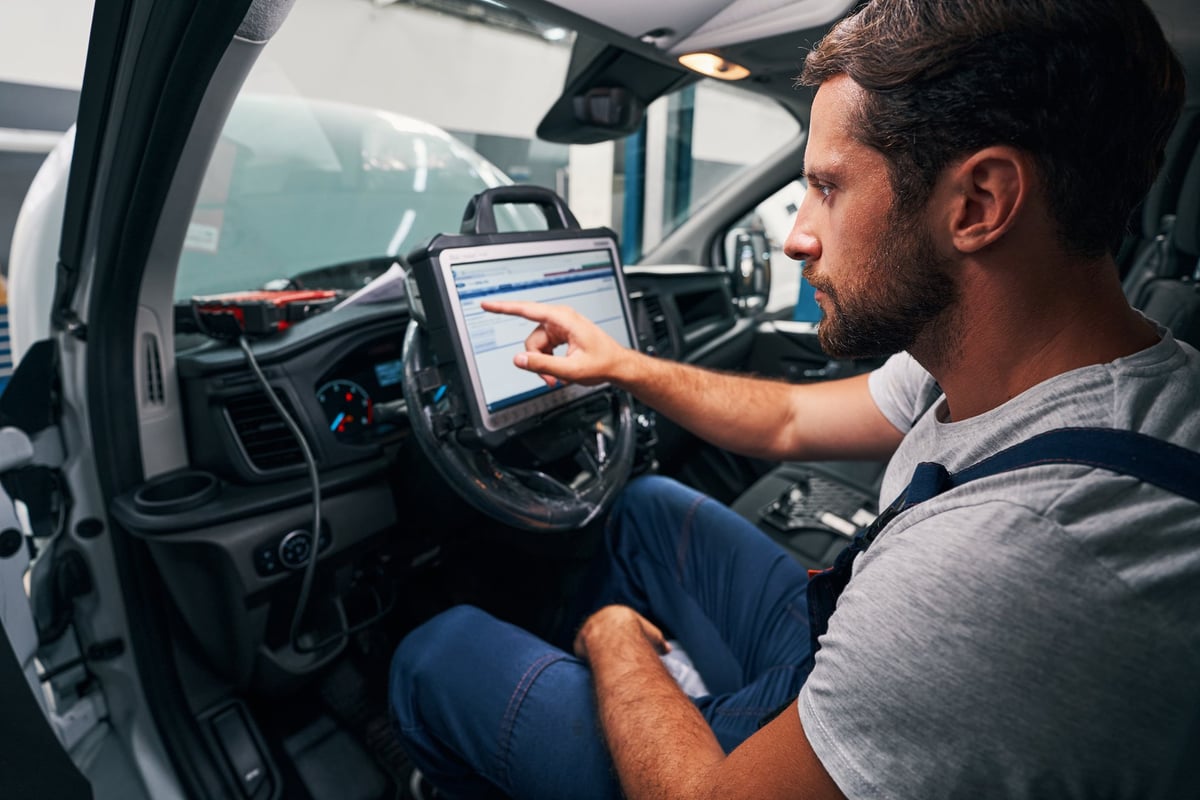
Stock imagery used for illustration. Your own equipment and technicians are what convince this customer — we replace this once a shop signs on.
The free Auto Repair Marketing Audit reviews six areas of your local presence. For diagnostics, the usual finding is that the shop bids on the head term, never mentions a diagnostic fee, and sends traffic to a homepage with no process explanation at all.
No rankings promised. No lead counts promised. No twelve-month contract.
(509) 508-1008Tell us about the shop and we will review it.
Twenty minutes on the phone, no pitch deck, and a straight answer about whether your diagnostics page is answering the questions a burned customer is actually asking.
Auto repair marketing overview The audit Found On Local home