Trapped moisture
Coating damp wood traps water inside. It has to leave somewhere, so it lifts the film from underneath. Moisture content is checked before a brush touches the deck.
Test before coating
Demonstration website created by Found On Local. This is not an operating painting company.
Cedar & Stain
Outdoor Wood Finishes
Wood is not a wall
A wood-first layout for a staining specialist: moisture reading before coating, stripping when a previous stain has failed, and the honest conversation about how often exterior wood actually needs to be redone.
Moisture
tested first
Old stain
stripped
No invented
results

Outdoor wood layoutIllustrative imagery — not a client photo
This layout shows
Maintenance reality stated honestly, not hidden
Wood science, plainly
Staining is a moisture problem more than a color problem. This section explains that in plain language, which builds more trust than a before-and-after gallery alone.
Coating damp wood traps water inside. It has to leave somewhere, so it lifts the film from underneath. Moisture content is checked before a brush touches the deck.
Test before coating
Adding stain over a flaking one guarantees it fails again. Where a previous coating has let go, stripping back is the only route to a finish that bonds.
Strip when needed
Horizontal boards take sun, foot traffic, and standing water at once. Deck surfaces are treated as a wear surface with their own product, not matched to the house.
Wear-rated products
Exterior wood is a maintenance surface. No stain is permanent, and this page does not pretend otherwise — no "never needs refinishing" claims and no invented lifespan figures. What is offered instead is a realistic expectation for the exposure the deck actually has.
Outdoor wood services
Each surface behaves differently because each one sees different sun, water, and wear.
 Example concept
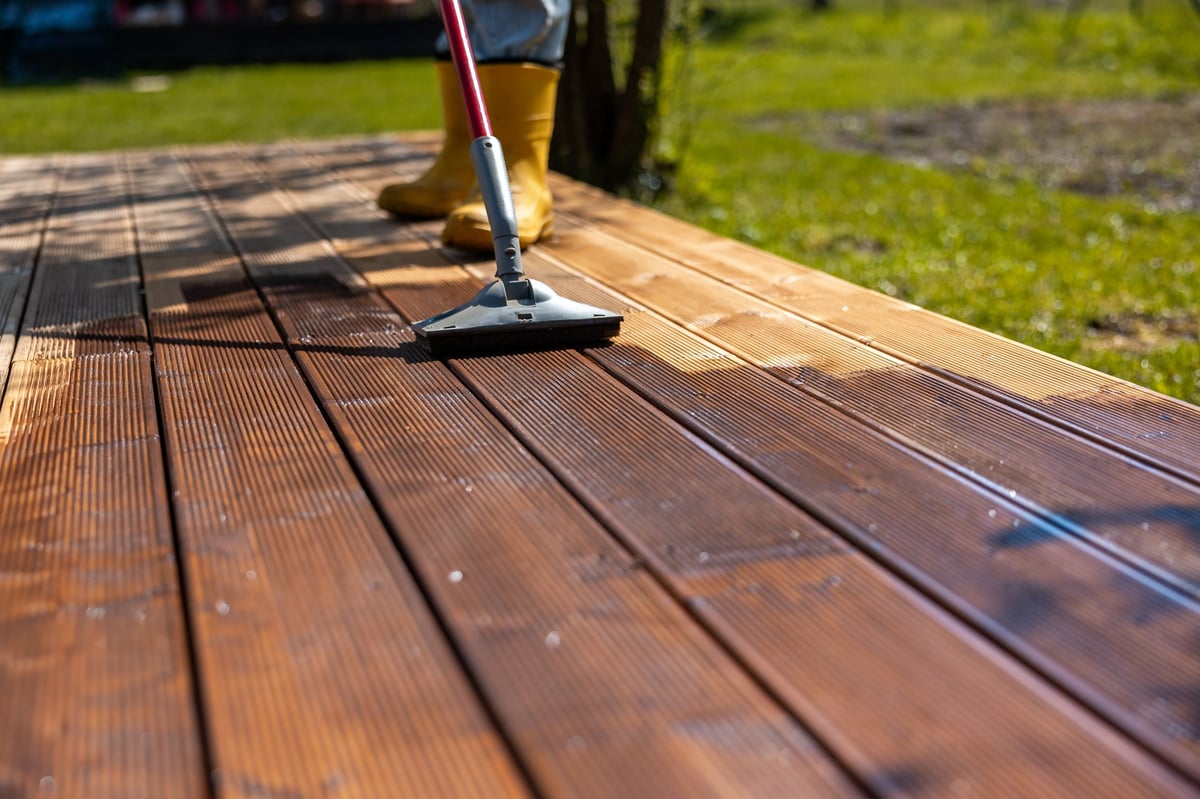
Decks
Boards cleaned, brightened, and dried to a workable moisture level before coating. Rails and spindles coated by hand so the coverage is even on every face, not just the visible ones.
 Example concept
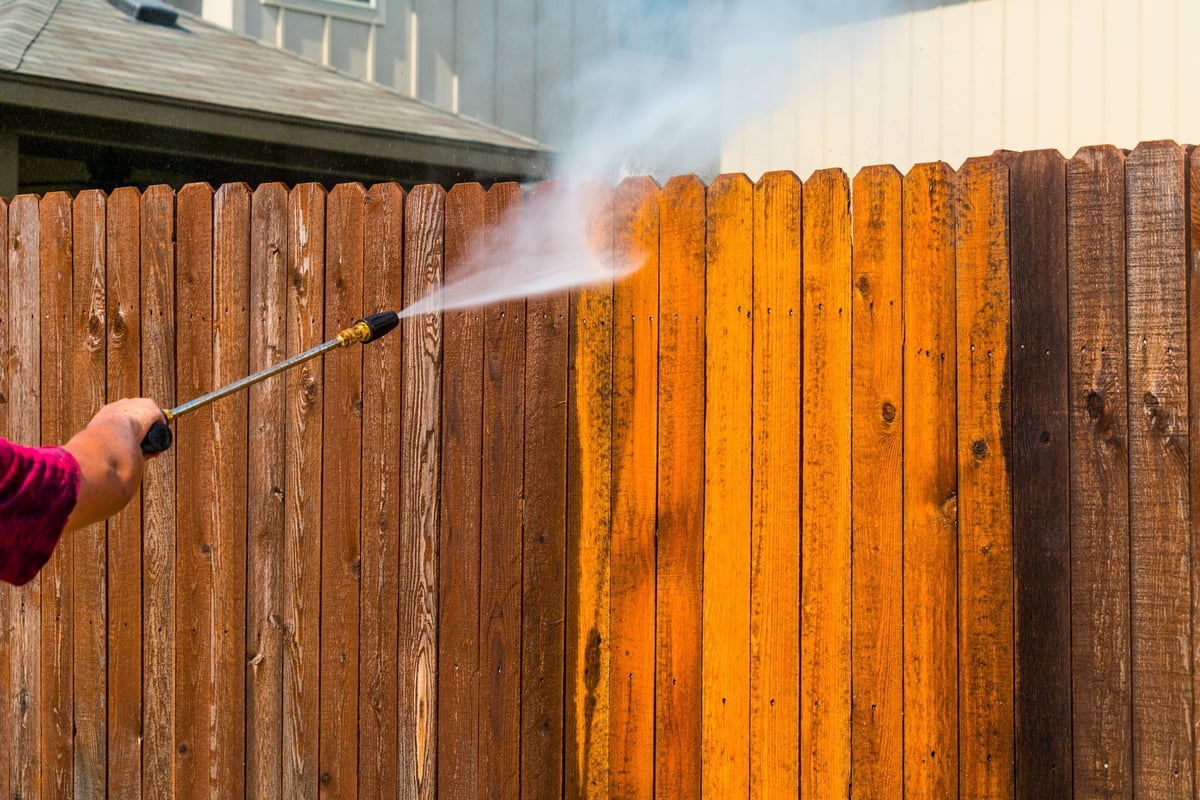
Fences
Both faces of a fence weather differently, so both are planned for. Weathered gray wood is brightened before staining so the new color reads consistently panel to panel.
Vertical wood takes water differently than horizontal. Siding is finished for shedding, with cut ends and joints addressed.
Overhead wood, beams, and slats — awkward angles where thin coverage is easy to miss and easy to see later.
Where a previous stain has failed, removal is quoted as its own stage rather than buried in a per-square-foot number.
Actual sequence
Wood has to dry between washing and coating. A schedule that ignores that is the fastest way to a stain that peels.
Moisture readings, loose boards, and the condition of any existing coating.
Failed coating removed so the new finish bonds to wood, not to something already letting go.
Grayed wood refreshed so the stain color reads true instead of muddy.
The deck sits until moisture is in range — days, not hours. This is scheduled, not skipped.
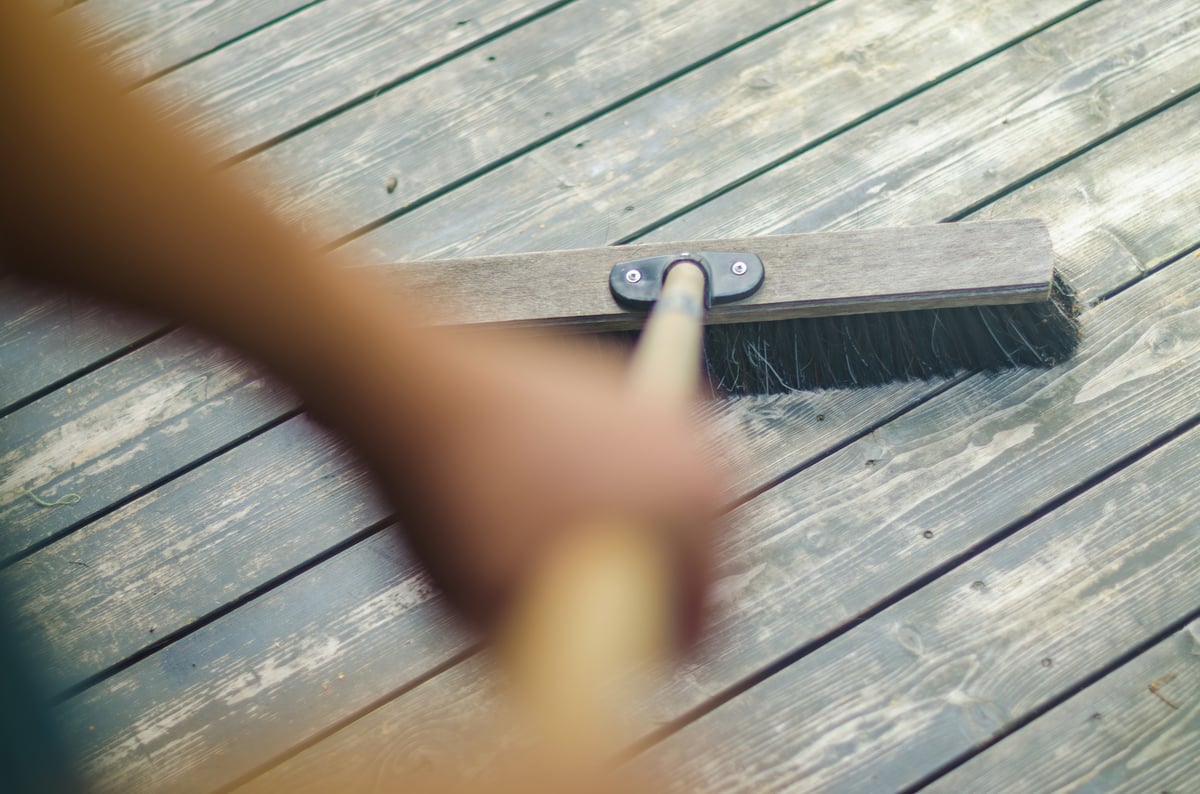
Coating worked into the grain and brushed back so it soaks in rather than sitting on top.
 Example concept
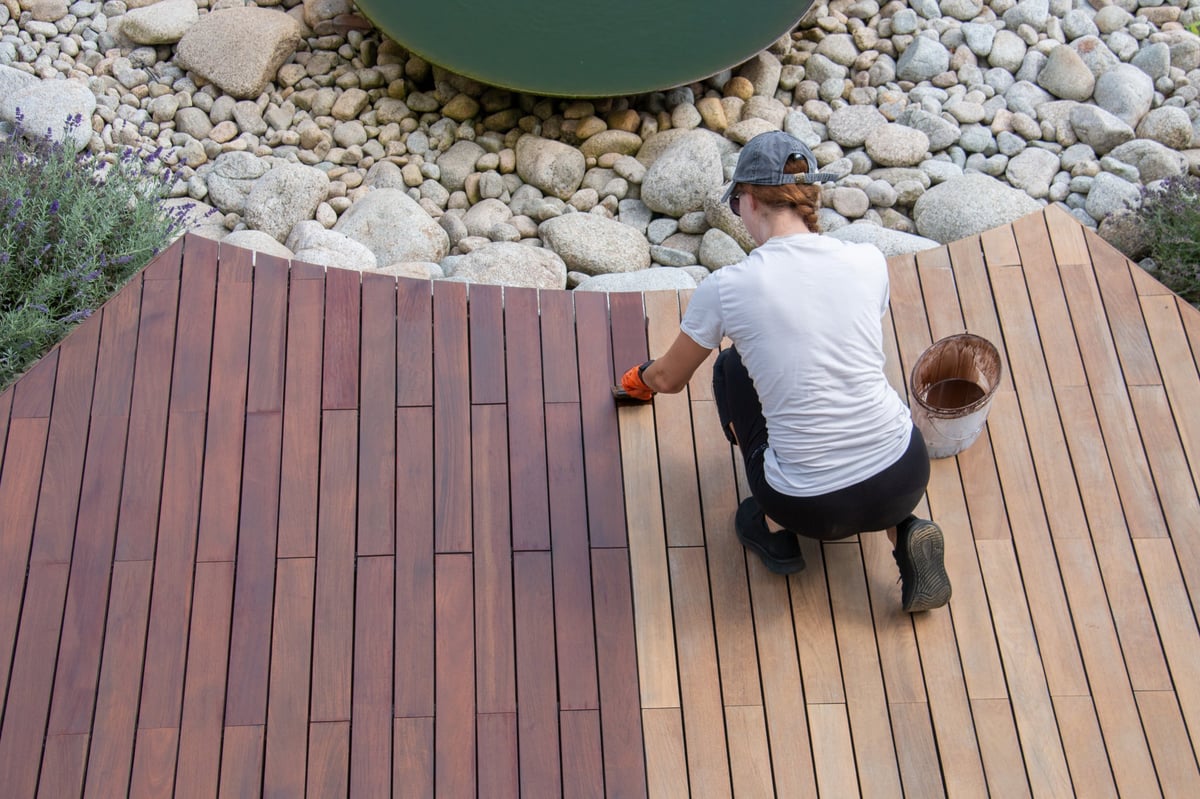
Oiled hardwood deck
 Example concept
Back-brushing technique
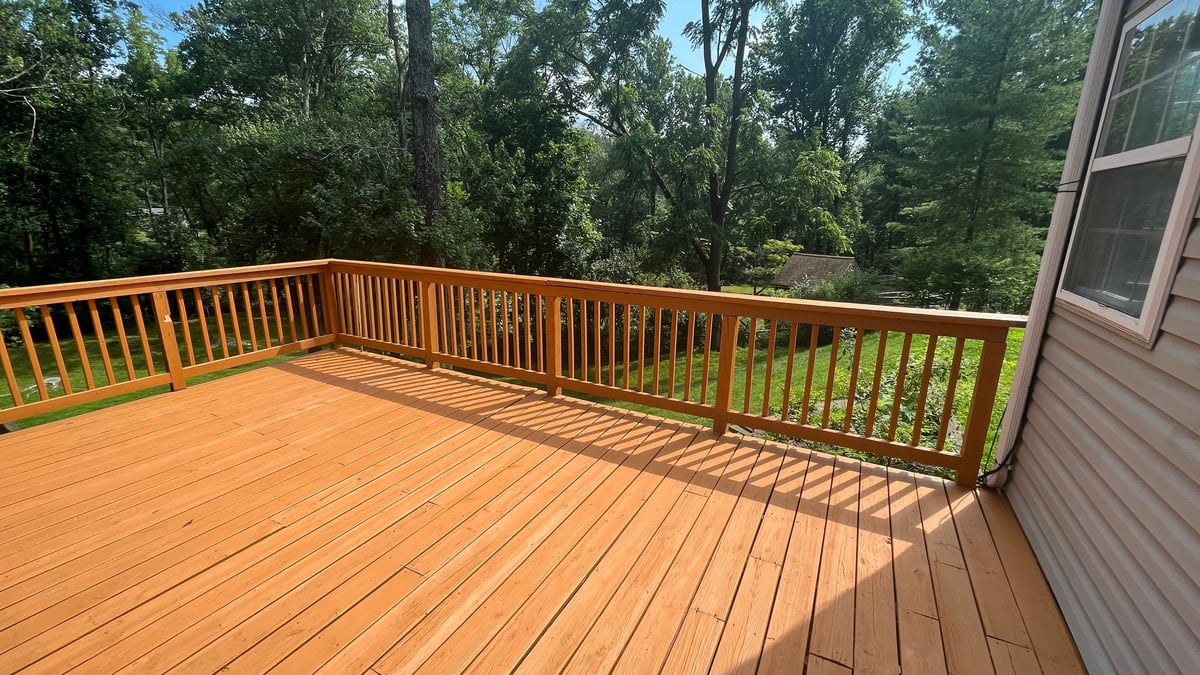 Example concept
Finished outdoor living
Illustrative stock photography only. No completed project or client is represented.
Deck & fence quote
Two decks of the same size can be very different jobs. Board condition, railing complexity, and whether an old coating has to come off all change the work involved — so the form asks about those.
Demonstration form. Nothing is sent to a staining contractor. Submissions go to Found On Local, the agency that built this example page.
Mockup — for decks, fences, and exterior wood
Request received — thank you.
This is a demonstration page, so your details went to Found On Local rather than to a staining contractor. Nothing has been scheduled.