Hardscape
Patios & terraces
Pavers, natural stone, and level changes. The page question that matters is drainage and how the surface handles a freeze — not a gallery of square footage.
Demonstration website created by Found On Local. This is not an operating landscaping company.
Design-build outdoor living
A demonstration of how a design-build page should read for patios, pergolas, fire features and full landscape construction — where the decision is slow, the investment is significant, and the page has to earn a consultation rather than demand a call.
There is no consultation to book here. Outdoor Living Landscapes is a fictional brand; both links above reach Found On Local.
Sample scope
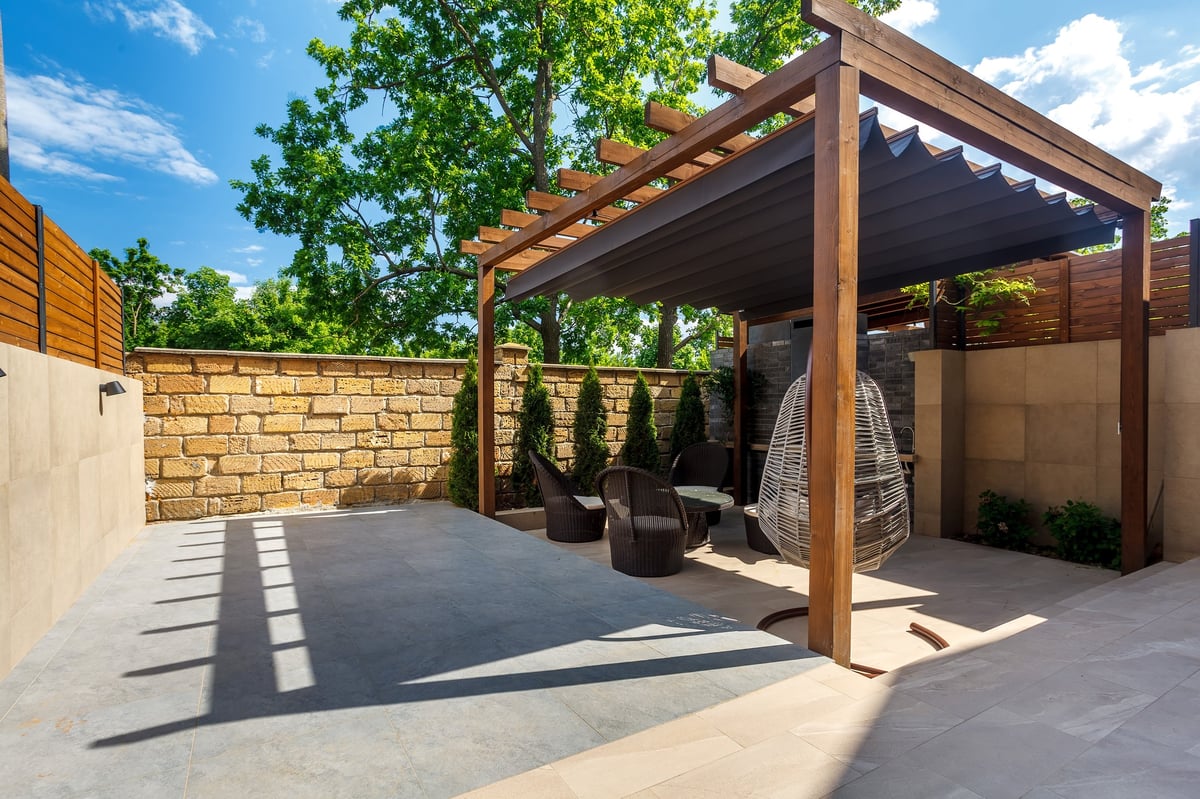
Pergola · fire feature · seating terrace
01 — What gets built
Design-build buyers compare possibilities, not service names. Each block is written to help someone picture the outcome — which is the job this page type has to do.
Pavers, natural stone, and level changes. The page question that matters is drainage and how the surface handles a freeze — not a gallery of square footage.
Shade changes how a space gets used at 3pm in July. Honest pages talk about orientation and span before they talk about style.
The single most requested addition, and the one most dependent on gas supply, clearance, and local rules. A page that skips those reads as unrealistic to anyone who has priced one.
Privacy is the actual purchase. The useful content is growth habit and mature size, plus what a plant looks like in the two seasons it is not flowering.
Sound is the appeal, maintenance is the objection. Addressing upkeep directly is what separates a credible page from a mood board.
No project counts, no "award-winning" language, no client names, no before-and-after photos presented as completed work, and no investment ranges. This brand is fictional, so it earns none of those claims.
02 — How a project moves
A design-build buyer is making a decision over weeks, not minutes. The page has to describe a sequence that feels manageable, because the alternative — an undefined process — is what causes people to delay indefinitely.
What the space is for, who uses it, and what has already been ruled out. This is where a good page sets expectations — it should not imply a design is produced for free at this stage.
Slope, drainage, access, utility locations, and what a machine can reach. This stage is invisible in most marketing copy and it is usually what changes a budget.
Materials, layout, and phasing. Phasing matters more than most pages admit: many projects are built in parts across more than one season.
Sequencing, site protection, and how long the yard is unusable. This is the stage homeowners worry about most, and the one least often described on a website.
Design-build pages lose inquiries at the moment a homeowner cannot tell what happens after they submit a form. A visible sequence reduces that hesitation without inventing a timeline, a price, or a promise.
No specific build duration, no pricing tiers, no financing offers, and no statement that a design consultation is free. Those are business policies, not design decisions.
03 — Concept imagery
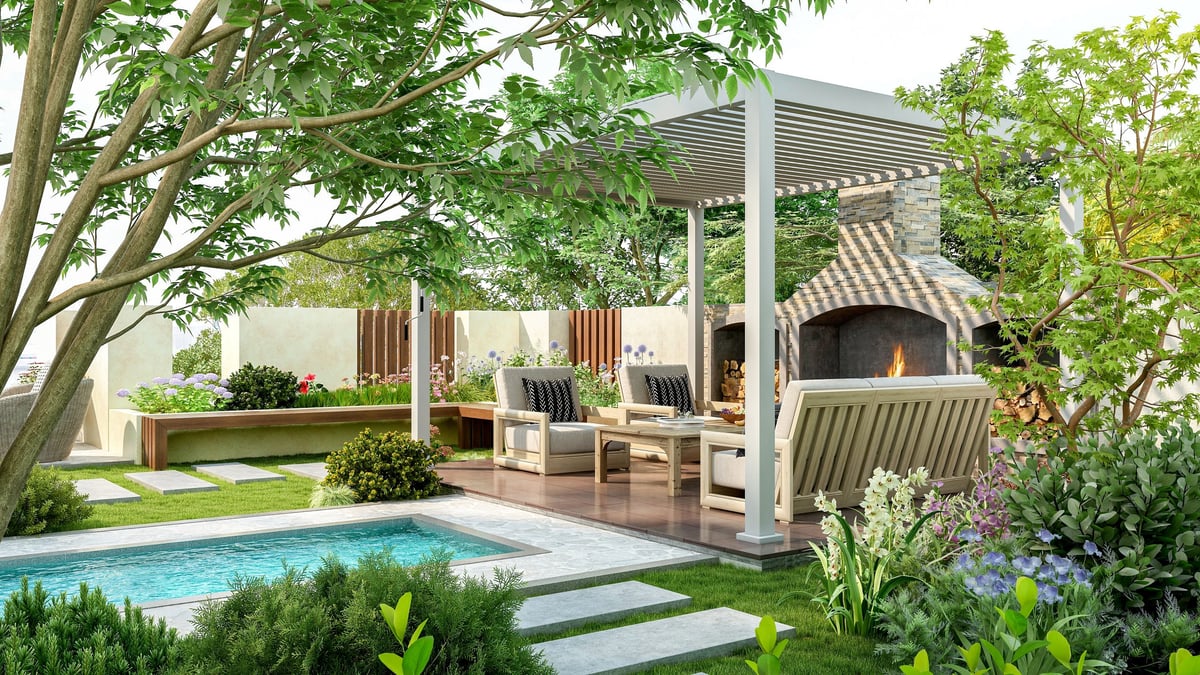
Real design-build sites show their own work. A fictional brand cannot, so these are labeled as concept references rather than projects.
Concept reference — not our project
Pergola and pool terrace
Concept reference — not our project
Covered outdoor kitchen
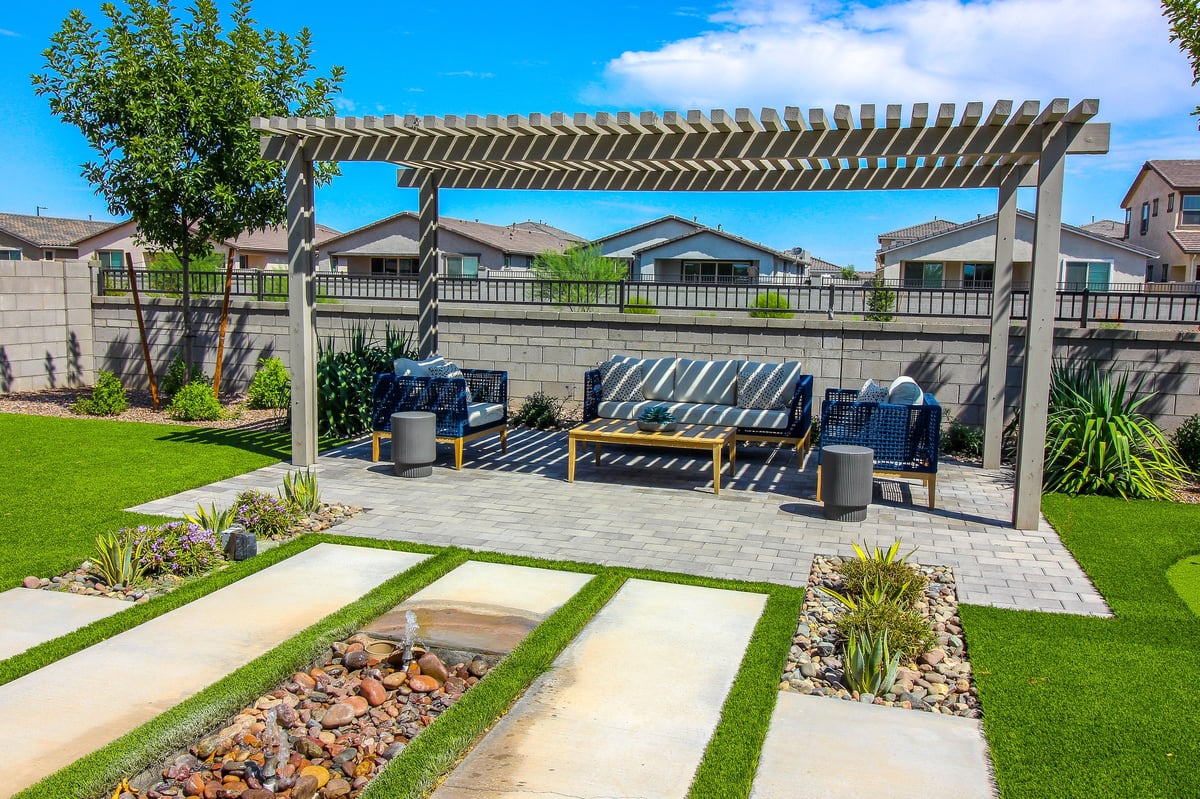
Concept reference — not our project
Shade structure and seating
The convention this demonstrates: if a page uses stock or rendered imagery, say so next to the image. Design-build buyers ask "did you build that?" and a site that answers the question before it is asked keeps more credibility than one that lets them assume.
04 — Questions
Structure and tone only. Nothing below describes a real company's policy.
In practice this varies by company and scope, and a page that answers it with a single "yes" or "no" is usually oversimplifying. The useful version explains which project sizes need drawn plans and which do not — a business policy this demo cannot invent.
Phasing is common in design-build, and a page that acknowledges it removes a major reason homeowners delay the whole project. How phasing is priced or contracted is a company decision, so this demo describes the concept only.
Site access, slope, drainage, and material choice — roughly in that order. This is one of the few answers a demo can give honestly, because it is a statement about construction rather than about any company's pricing. No dollar figures appear here for that reason.
No. It is a fictional brand created by Found On Local as a demonstration of layout, typography, and content structure for design-build landscaping companies. It designs nothing, builds nothing, and no contact path on this page reaches anyone except Found On Local.
Demonstration website created by Found On Local
Outdoor Living Landscapes is a design demonstration, not a contractor. If you run a landscaping or design-build business and want a site built with this level of structure, talk to the people who made it.
A fictional design-build brand used to illustrate an editorial outdoor living page. No design, construction, or consultation is offered.
Every contact path here leads to Found On Local.
Demonstration website created by Found On Local. This is not an operating landscaping company.