Demonstration website created by Found On Local. This is not an operating landscaping company.

Hardscape Patio Builders Demo brand — fictional
(509) 508-1008

Pavers · Walls · Stone · Grade

A patio is judged in year eight, not on the day it is finished.

This is a demonstration page for a hardscape contractor concept. It shows how a patio and retaining wall company should explain excavation, base preparation, drainage, edging and grade — the parts a homeowner cannot see once the pavers are down, and the parts that decide whether the surface stays flat.

Both buttons reach Found On Local — not the fictional company. Nothing on this page can be booked or purchased.

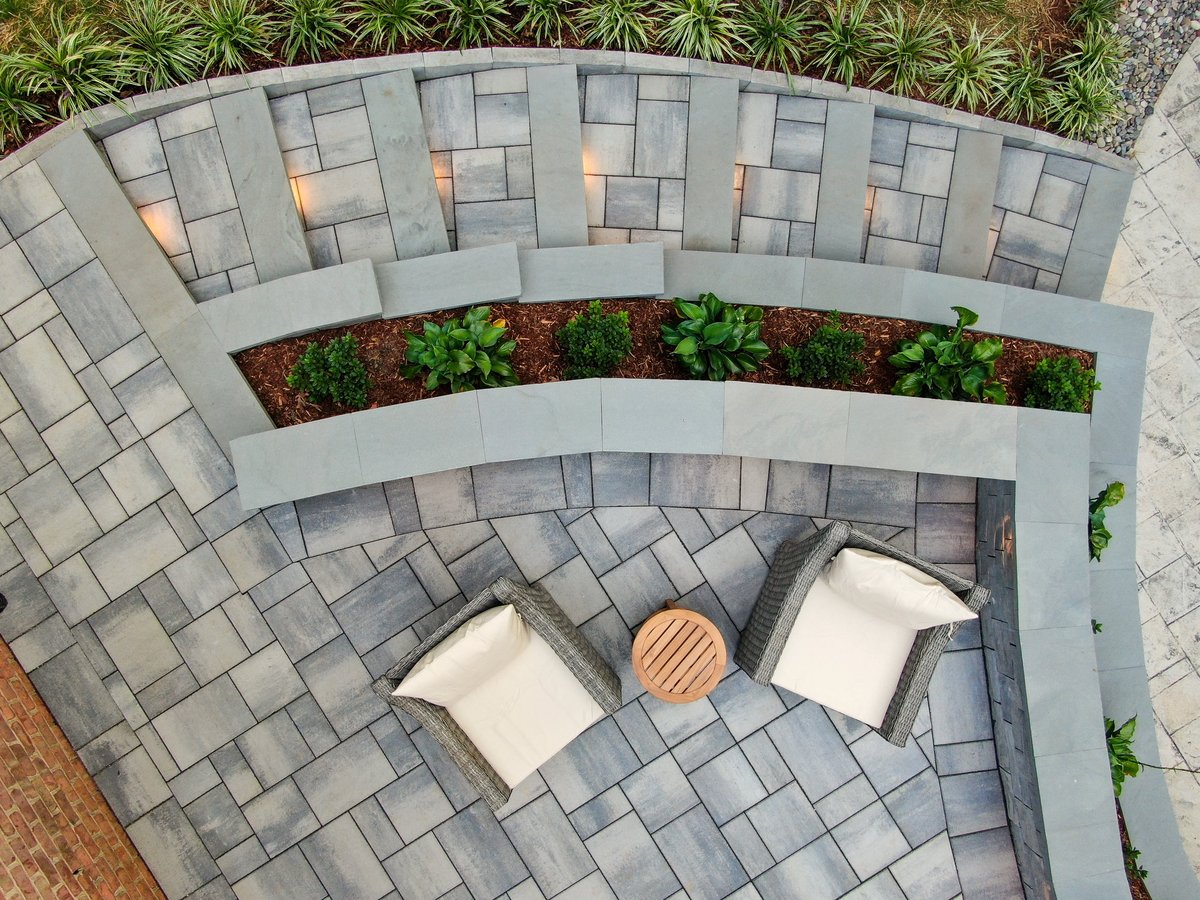
Top down aerial photograph captures the geometric layout of a custom residential stone patio with smooth stone pavers, a curved retaining wall, built in garden planters, and wide steps with warm low voltage accent lighting

Layer 01

Excavation

Layer 02

Base & compaction

Layer 03

Surface & edge

Work types

Five kinds of work, and what separates each

Most hardscape quotes blur together because the pages describe finished surfaces instead of the work behind them. These five categories cover most of what a patio and wall contractor is actually asked to price — each one has its own constraints, and each should be its own page.

Paver terraces

Paver patios and terraces

Interlocking concrete pavers over a compacted aggregate base, with edge restraint and a joint sand that has somewhere to drain. The conversation that matters is base depth and what sits under it — not colour selection.

  • Base depth by soil and traffic
  • Edge restraint type
  • Slope away from the structure
  • Drainage path and outlets
Retaining

Segmental retaining walls

Block walls that hold a grade change, with geogrid, drainage aggregate and a footing beneath the buried course. Height, surcharge and soil determine what is required.

Natural stone

Flagstone and natural stone

Irregular and cut stone set in mortar or on a sand bed. Thickness varies piece to piece, so layout and cutting take longer than paver work.

Access

Steps and grade transitions

Where a slope becomes stairs, landings or ramped walks. Rise, run and landing depth are dimensional decisions, not design preferences.

Repair

Settling, sinking and re-leveling

Lifted pavers, heaving, rutting and wall lean. A repair page exists because the cause is usually drainage or base — not the surface.

Why this matters for search. These categories carry different search intent. Someone searching for a settling patio wants a repair answer, not a design gallery — and the page that gives them one is the page they call.

Build layers

What is underground is the product

A paver surface is the least interesting part of a patio. The layers beneath it are what a contractor is really building — and what a homeowner is really paying for.

Layer 01 · Surface

Pavers or stone, joint sand, edge restraint

The visible course. Edge restraint is what stops the field from spreading outward over time.

Layer 02 · Bedding

Screeded sand or fine aggregate

A thin, uniform course that lets the surface sit even. Thick bedding is a warning sign, not a shortcut.

Layer 03 · Base

Compacted aggregate, in lifts

Placed and compacted in stages rather than one deep pour. Depth depends on soil, drainage and whether a vehicle ever crosses it.

Layer 04 · Subgrade

Excavated, graded, and drained

Native soil prepared to shed water. Expansive clay and organic fill get handled here, not covered up.

Layer depths, compaction methods and geogrid requirements are engineering decisions made per site. This page does not prescribe any of them.

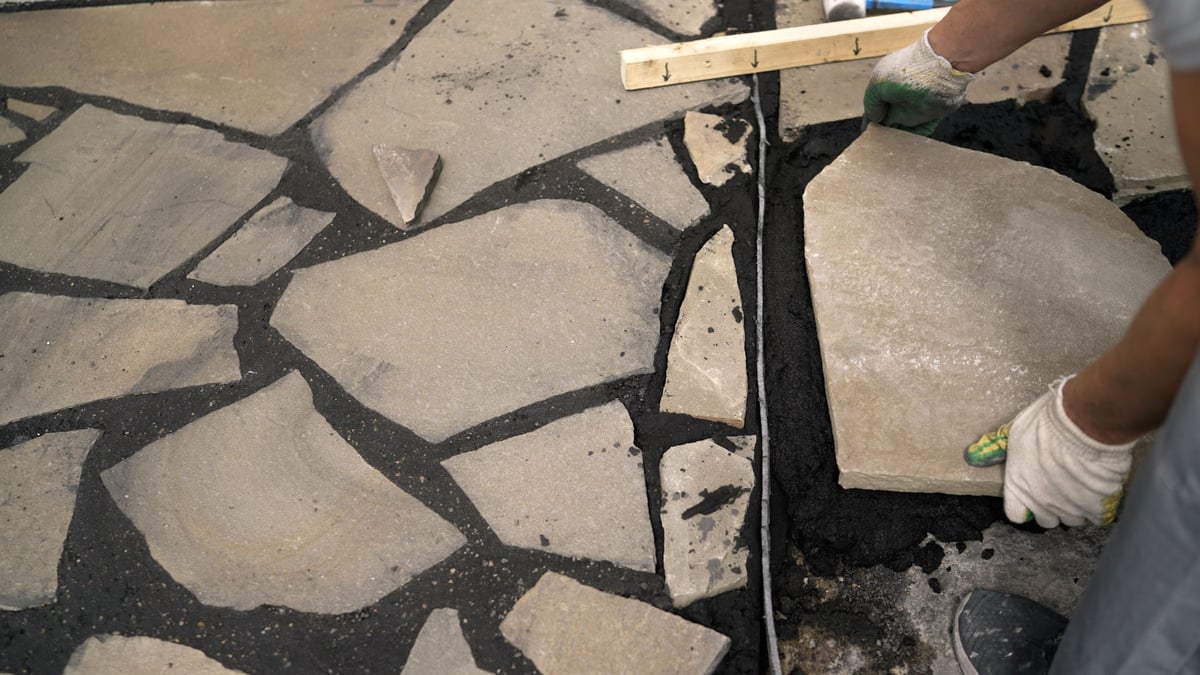
Construction worker carefully placing irregular flagstone on a bed of dark mortar, creating a decorative pathway

Questions a quote should already answer

  • 01 How deep is the base, and compacted in how many lifts?
  • 02 Where does water leave the patio, and where does it go after that?
  • 03 What holds the edge, and is it pinned or glued?
  • 04 Is existing soil removed or left in place under the new build?
  • 05 If this settles, what does the contractor's repair commitment cover?

A page that answers these does not need to advertise a workmanship guarantee to earn trust. Specificity does the work.

Project sequence

From first walk-through to final joint sand

Hardscape buyers are anxious about two things: a crew that disappears mid-project, and a surface that fails after the first winter. A sequence section settles both by showing that there is an order, and that each stage has a stopping point where the work gets inspected.

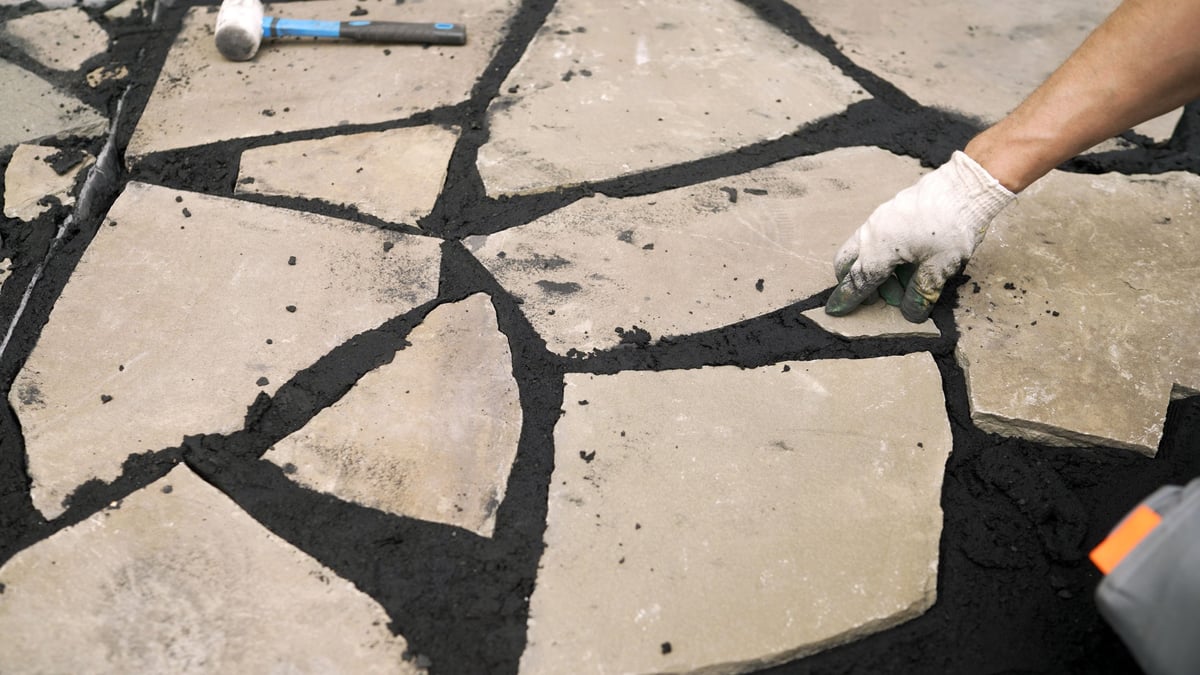
Professional construction worker brushing excess grout from newly laid flagstone patio during meticulous outdoor landscaping installation process
  1. 1

    Site walk and measurements

    Grade, drainage direction, access for equipment, existing utilities and what sits below the surface. This is where a project's real constraints first appear.

  2. 2

    Layout and scope agreement

    Dimensions, materials, wall heights, drainage plan and what is explicitly excluded. A scope that lists exclusions is clearer than one that lists only inclusions.

  3. 3

    Excavation and base build

    Removal, grading, aggregate placed in lifts and compacted. For walls, this is also where geogrid and drainage aggregate go in.

  4. 4

    Surface install and cutting

    Field layout, edge restraint, cuts at borders and steps. Cut quality at edges is one of the most visible signs of care.

  5. 5

    Joint sand, cleanup, and handover

    Joints filled, surface cleaned, site restored, and a walk-through of what was built and how to care for it.

What this demo does not do: it does not promise a schedule, a crew size, or a completion date. Those are commitments a real contractor makes in a written scope, and inventing them here would misrepresent how the work is sold.

Page anatomy

Why this page is arranged the way it is

A demo is only useful if it can be explained. Each block below answers a specific question a hardscape buyer brings to the page.

Block 01

Hero statement

Leads with durability rather than beauty, because that is the fear hardscape buyers bring. Both contact paths sit immediately below it.

Block 02

Service categories

Five work types with an unequal layout — paver terraces get more space because that is the highest-volume inquiry for this type of contractor.

Block 03

Build layers

The differentiating asset. It converts invisible expertise into something a homeowner can evaluate, and it is not copyable by a competitor without the same knowledge.

Block 04

Quote question list

Teaches the buyer how to vet any contractor, including this one. That posture reads as confidence rather than sales pressure.

Block 05

Project sequence

Reduces abandonment anxiety by showing a defined order with inspection points, without promising dates the contractor may not control.

Block 06

FAQ and honest limits

Answers the awkward questions — permits, winter timing, repair callbacks — because unanswered questions become someone else's call.

Included in this demo

  • Real service taxonomy, not generic filler
  • Technical education a buyer can use
  • Mobile-first responsive layout
  • One clear contact path throughout

Deliberately absent

  • No reviews, ratings or testimonials
  • No prices, financing or payment terms
  • No license numbers, awards or years in business
  • No project counts, guarantees or addresses

Awkward questions

The questions hardscape buyers actually ask

Written the way a page should answer them — plainly, and without promising an outcome that depends on a site nobody has visited yet.

Found On Local

This is what a hardscape page can look like

Found On Local builds pages like this for real landscaping companies — pavers, retaining walls, natural stone, and repair work. If this structure would help your business explain what it actually builds, that is the conversation.

Hardscape Patio Builders

A fictional brand used to illustrate a hardscape and patio construction page structure. No work, materials, or pricing are offered.

  • Five distinct hardscape work types
  • A build-layer diagram explaining what is buried
  • Quote-vetting questions for buyers
  • Responsive from mobile up

Reach the real business

Every contact path on this demo leads to Found On Local.

Demonstration website created by Found On Local. This is not an operating landscaping company.