Website Example Demonstration design by Found On Local — not an operating electrical company

Service changes & panel replacements

The panel is the bottleneck in almost every electrification plan

Heat pump, induction range, EV charger, standby generator — each one adds load to a panel that was sized decades before any of them existed. This demonstration layout is built for the contractor whose job is capacity, not callouts: measured, documented, and explained in numbers a homeowner can follow.

Scope
Panel & service
Method
Load calculated
Output
Written findings
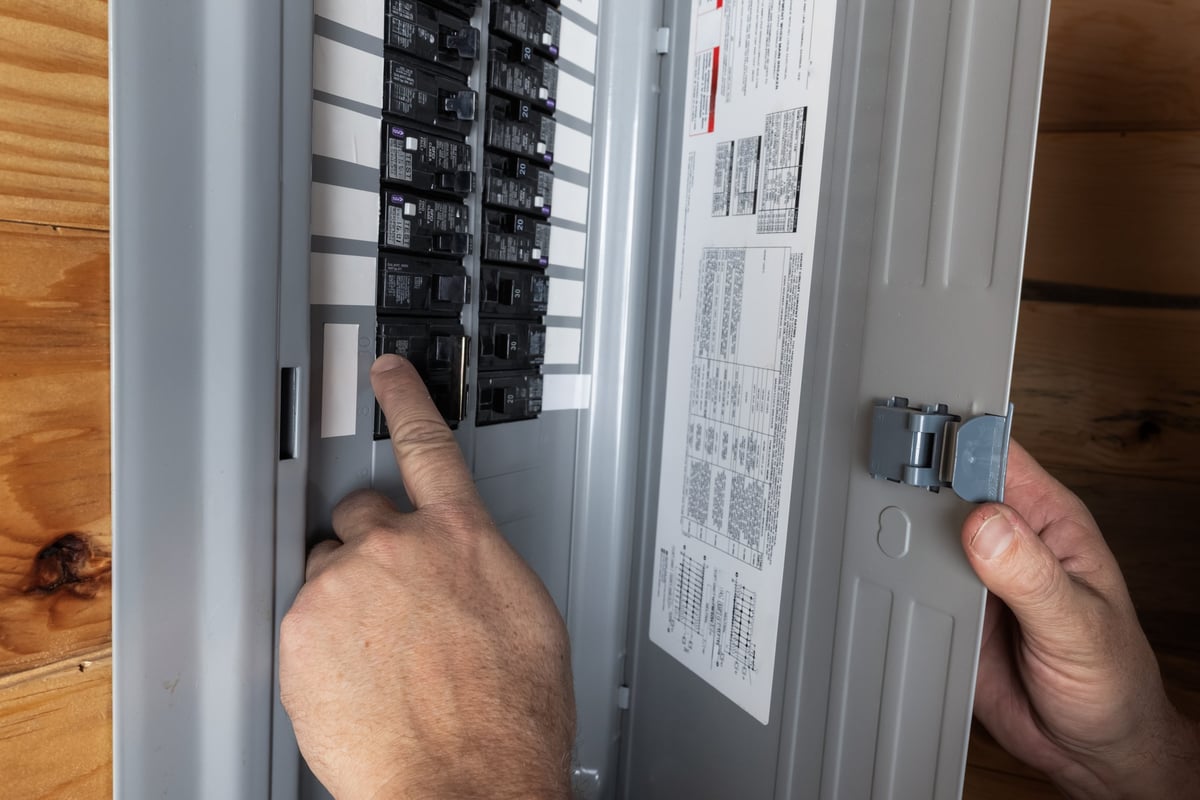
Homeowner inspecting circuit breakers inside a residential electrical panel to restore power
Fig. 01
Stock photograph used for layout demonstration only.
What this page is

A fictional brand built to demonstrate a technical panel-upgrade layout.

No amp ratings, prices, or code results are claimed on this page.

Every number a real build needs comes from the owner and the site.

Scope of work

Six categories, each with a different reason to exist

Panel work is sold on reasoning, not adjectives. Each row below states the trigger — the thing the homeowner noticed — and the technical question it raises. That structure is what separates a capacity contractor from a general handyman page.

01

Panel replacement

Full enclosure swap

The trigger is usually physical: a panel that is full, a brand with known issues, or an enclosure that has been added onto too many times. The technical question is whether the existing service conductors and grounding support a straight swap or something more.

Honest limit: the answer is determined on site, not from a photo in a message thread.

02

Service change

Overhead or underground

Replacing the service means the mast, meter base, grounding electrode system, and the coordination with the utility — not just the box on the wall. This row exists to make the scope visible before anyone discusses a number.

Honest limit: what the utility owns versus what the property owner owns is stated plainly, because it is the first point of confusion.

03

Load calculation

The document everything rests on

Before anything is upgraded, the existing and proposed load gets worked out on paper: connected load, demand factors, and the headroom left over. This is the least visual part of the job and the most important to show on the page.

Honest limit: a calculation answers "does the service carry this", not "will the project be cheap".

04

EV charger readiness

Circuit provisioned, not promised

A charger is a continuous load that runs for hours. The page frames this as capacity planning — where the car parks, how far the run is, and whether the panel can support it — rather than a product promotion.

Honest limit: no charger brand, charge rate, or installation price is stated.

05

Standby generator readiness

Transfer equipment planning

A standby generator changes how a panel is configured: what gets backed up, how transfer equipment is arranged, and what has to stay off. This row explains the planning question without pretending to size or specify a unit.

Honest limit: the decision of what is essential belongs to the household, not the contractor.

06

Pre-purchase capacity review

For a house you do not own yet

A buyer wants to know what the panel can and cannot take before the renovation starts. This is the service with the clearest value to a homeowner and the one almost nobody markets — which is exactly why it belongs on the page.

Honest limit: a review informs a decision; it is not a prediction of future cost.

Notice what is missing: no ampere figures, no quoted ranges, no "typically completed in a day" language. Those are findings, and this page does not have any to report.

(573) 520-3674

Method

Assess, calculate, document, then work

Four phases. The order matters — the calculation gates the work, not the calendar.

On-site assessment

The panel gets opened and actually looked at. Enclosure, breaker types, conductor sizing, grounding and bonding, and the condition of the meter and mast. Photographs and notes are taken here, because everything after this depends on what is in the enclosure.

  • What is there today, recorded rather than estimated
  • Conditional findings noted, not resolved on the spot

Load calculation

Existing load and proposed additions are worked out with demand factors applied, and the result is compared against the service. The output is a determination: adequate, marginal, or insufficient — with the arithmetic shown, not asserted.

  • Appliances and equipment inventoried by the homeowner
  • Future plans included, not just what is installed now

Written scope

What will be replaced, what will be reused, what the utility has to do first, and what is excluded. Written scope is how a technical contractor earns trust — the homeowner can compare it against another quote line by line instead of guessing which number is which.

  • Exclusions stated as clearly as inclusions
  • Utility coordination identified where it applies

Work and closeout

The installation itself, then a documented closeout: labeled circuits, a panel schedule the homeowner can read, and an explanation of what changed. A panel nobody can label is a panel nobody can use.

  • Circuits identified and labeled in plain language
  • What to do if a breaker trips after the change

Deliberately unclaimed

A demonstration page has no findings to report

Nothing on this page states a completed capacity result, a service size achieved, a permit outcome, a timeline, or a cost. Those are site-specific facts. Where a live build would carry them, this layout carries an explanation of why the fact is not invented instead.

What a real build would fill in

Licensing details as verified by the owner

Service area defined by the contractor

Actual scheduling and availability

Warranty and guarantee terms in their words

Real photographs of their own work

Permit handling described as practiced

Found On Local collects these from the business before launch. They are never assumed for a demonstration.
Territory

Where the work happens, stated honestly

Panel work is not a same-day emergency callout. It is scheduled, permitted, and planned. That means the service area can be stated in terms of practicality rather than a pin dropped on a map to look local.

This demonstration page shows no street address, because the fictional company does not have a building. What it does show is the reasoning a contractor would use to describe where their work is realistic.

Why no address: a mailbox storefront or a vacant lot on a map damages trust more than having no address at all. A demonstration page should not create either impression.

Coverage determination Illustrative — not a real map
Zone 1

Close-in area

Routine scheduled work. The practical default for assessment visits and installations.

Zone 2

Surrounding communities

Scheduled work as the calendar allows. Scope is confirmed before a date is set.

Zone 3

Beyond the usual range

Call and ask. Whether it is workable depends on scope and schedule — a person decides, not a form.

No street address appears anywhere on this page. Boundaries are supplied by the real business, never assumed.

(573) 520-3674

Assessment request — mockup

The intake asks what the calculation needs

A panel request form should collect the information that determines whether the job is a like-for-like swap or something larger: what is already in the house, what is being added, and whether the utility is involved. Two fields asking for a name and a message waste the one chance to learn anything useful.

Non-submitting mockup

This form is a visual demonstration only. It has no action, sends no data, and is not connected to the Found On Local audit workflow or any routing, storage, or notification system.

Direct line

(573) 520-3674

Found On Local — the agency that built this demonstration page. This is not a fictional electrician's phone number.

Panel assessment intake Form 01 · Demo
What is already installed

Do not enter sensitive information in a demonstration form.

Demonstration form only. No data is transmitted, stored, or delivered. No real business receives this submission.

Questions & determinations

What homeowners ask before committing to panel work

Panel upgrades are a considered purchase, not an emergency. These answers are written for someone comparing two quotes or deciding whether to do the work at all.

Still deciding? A conversation with Found On Local about your existing site costs nothing and does not commit you to anything.

(573) 520-3674