Website Example

Demonstration design by Found On Local — not an operating electrical company

GridGuard Generator Electric
Call
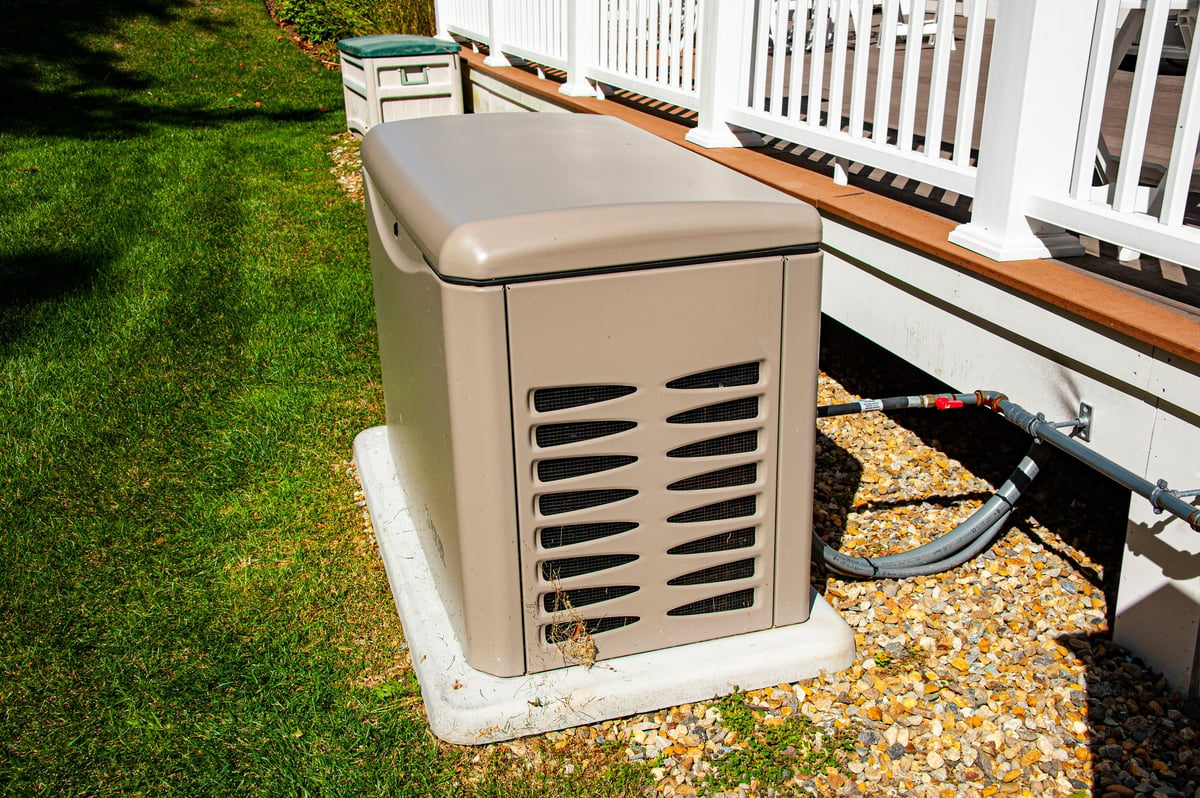
Residential standby generator installed on a concrete pad beside a house

Standby power, electrically planned

A generator is only as good as what it can actually carry

Buying the unit is the simple half. The electrical work decides what comes back on when the grid drops: the transfer equipment, the circuits selected, the load that has to stay off, and the coordination it takes to make all of that safe. This layout is built for the contractor who sells that reasoning.

Every call button on this page dials Found On Local, the agency that built the example — not a generator dealer.

Priorities worksheet

Example

Life safety & essentials

Heating source, refrigeration, well pump if there is one, and whatever the household cannot go without.

Comfort & continuity

Lighting circuits, communications equipment, and the outlets that keep a household working.

Deferred by design

Large loads intentionally left off backup. Naming these is as important as naming what stays on.

Categories only. No wattage, run time, or unit size is stated — each depends on the house.

Electrical scope

Five pieces of the job nobody photographs

A generator photos well. The transfer equipment and the circuit selection do not. That is precisely why a serious contractor's site has to show them — the invisible work is where the risk lives.

Transfer equipment

Transfer switches and what they do

The transfer equipment is what separates utility power from generator power so the two never meet. How it is configured depends on whether the household wants a few selected circuits backed up or the whole service. This card exists to make that distinction visible before anyone discusses equipment.

  • Selected-circuit approach explained
  • Whole-service approach explained

Load priorities

The household decides what matters. The contractor makes it electrically possible and explains the trade-offs honestly.

Load calculation

What the backup system has to carry is arithmetic on the house, not a guess based on square footage.

Wiring & connection

Conductor sizing, protection, grounding, and the physical route from the unit to the panel — the part that gets inspected.

Preparedness

Readiness review, before the storm

An existing installation is worth reviewing before the season starts: the transfer arrangement, the condition of the connection, and whether the household still knows what is — and is not — on backup. This card describes the concept. It makes no claim about performance during an actual outage.

No reliability claim, run time, or "never lose power" language appears anywhere on this page.

Deliberately absent: no kilowatt figures, no run times, no unit brands, no installed prices. Those are engineering and budget decisions, and a demonstration page has no house to make them for.

(573) 520-3674

Process

How the work is sequenced

Generator electrical work runs in a fixed order because each stage depends on the one before it. The worksheet in the hero is where it starts: the household names priorities, and everything technical follows from that list.

Note on sequence: the priorities conversation comes first on purpose. Selecting equipment before the household decides what matters produces a system that runs, but not necessarily one that helps.

  1. Priorities conversation

    What has to stay on, what can wait, and what the household is willing to leave off. This is a decision made with the people who live there, not for them.

  2. Site and panel assessment

    The existing service gets opened and documented: enclosure, grounding and bonding, the panel's condition, and where a unit could physically go with clearance that is not obstructive.

  3. Load calculation and configuration

    The priority list becomes a circuit list, and the circuit list becomes a load calculation. Only then does the transfer arrangement get settled.

  4. Written scope, permits, and coordination

    Scope in writing, exclusions stated, and the permitting and inspection step identified. Fuel supply for the unit is a separate trade — the page says so rather than implying one contractor handles everything.

  5. Install and handover

    Then the electrical install, followed by a walkthrough of the transfer equipment, the backed-up circuits, and the circuits that intentionally are not. A system nobody understands is a system nobody trusts.

Never invented here

  • Reviews, ratings, or testimonials
  • License or certification claims
  • Years in business or install counts
  • Guarantees or outage-time promises
  • Prices, financing, or rebate savings

Supplied by the real business

  • Verified licensing details
  • Their actual service territory
  • Units and equipment they install
  • Their own photographs of work
  • Warranty terms in their words

Service area

Coverage stated as a limit, not a boast

Most electrician sites list every town within a two-hour drive. That is a marketing decision, not an operational one. Generator electrical work involves site visits, coordination, and follow-up, which means distance genuinely matters.

This demonstration publishes no address, no map pin, and no town list — all three would be fabricated. What it shows instead is how an honest contractor frames coverage, including the zone where they say no.

No physical address

A fabricated street address on a demonstration page is the fastest way to mislead someone searching for a local contractor. GridGuard has no premises, so none is listed.

Tier 1 — Scheduled work, no travel question

Standard

The area the business treats as its own. Assessment visits and installations happen here without distance being a factor in the decision.

Tier 2 — Workable when the scope supports it

Conditional

Adjacent communities. Whether a project is taken on here depends on the scope and the schedule — a person decides, and the answer can be no.

Tier 3 — Out of range, and we say so

Declined

Beyond the point where a contractor can reasonably return for follow-up. Publishing this tier is what makes the other two believable.

In a live build these tiers would carry real town names and ZIP codes supplied by the business. None are invented here.

Check your area

Backup system intake

The form starts with priorities, because the install does

A generator request form that asks only for a name and a phone number tells the contractor nothing about the job. This one collects the inputs the calculation needs — what the household already has, what it wants backed up, and whether a unit is already installed.

Inert mockup

This form is a visual demonstration. It has no action, no method, and no connection to the Found On Local audit workflow. Submitting it transmits nothing to anyone.

Found On Local (573) 520-3674

The agency behind this example — not a fictional generator company.

Backup readiness intake

Form 01 · Demo

Current situation
What should stay on during an outage

Do not enter sensitive information in a demonstration form.

Demonstration form only. No data is transmitted, stored, or delivered, and no real business receives this submission.

FAQ

What homeowners ask about backup power

These are the questions that come up before a decision, answered without inventing a number where a number cannot honestly exist.

Prefer to talk?

(573) 520-3674

Found On Local — the agency behind this example